Wintery misty Marievale

This post shows images from a Sunday morning visit to Marievale, a few kilometres north of Nigel. We arrived at Marievale at about 6h45. It is winter in SA at the moment and the Highveld winter mornings can be icey, and around Nigel and Marievale they can also be very misty. The first image was taken around 7h15 to give you an idea of how thick the mist was and how moody it made the atmostphere. Surprisingly, there was alot of bird activity despite the icey cold conditions.

Marievale 7 July 2013  0002

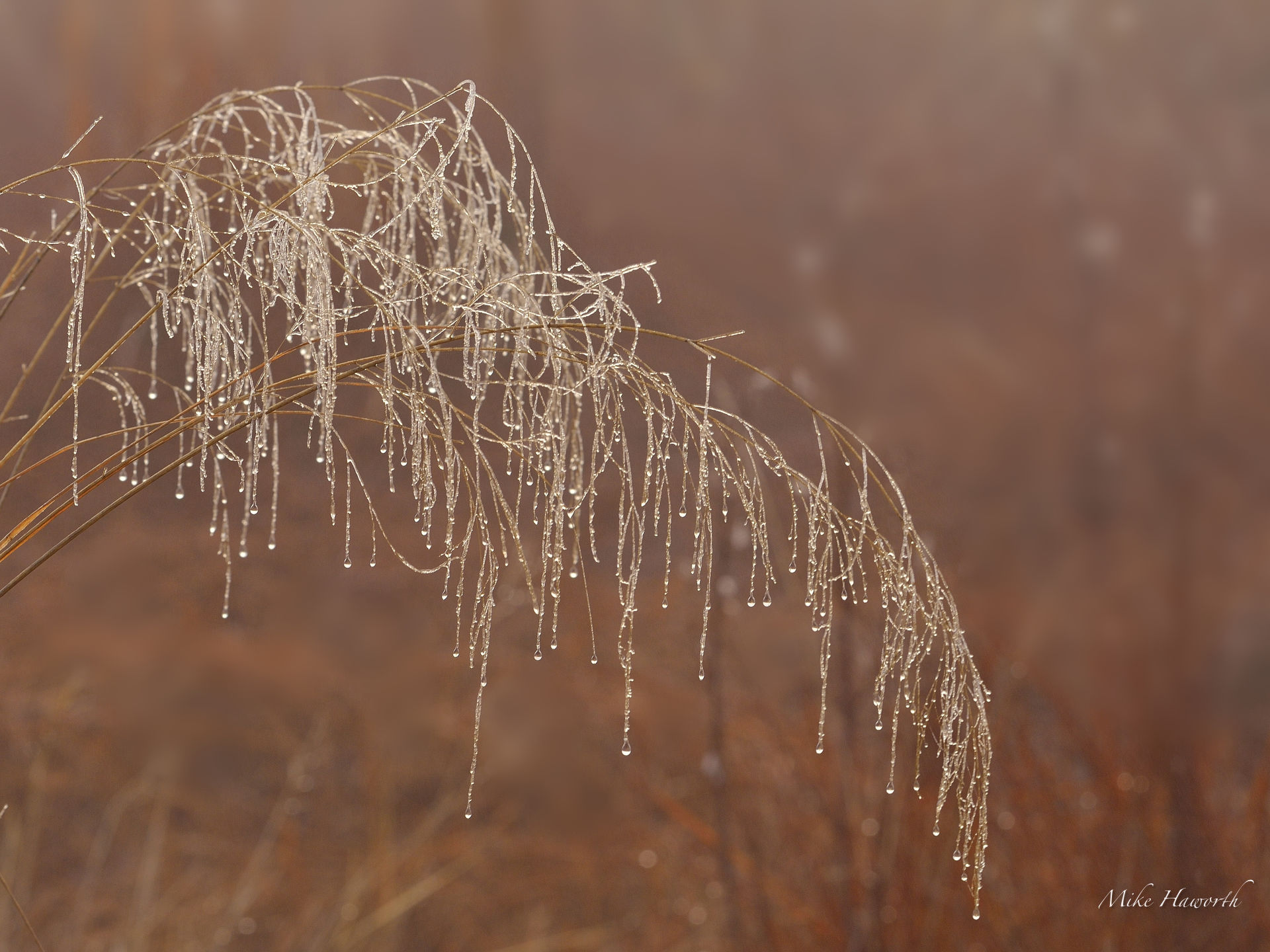
The thick mist really filtered and diffused the light. We drove past an open grassland in the almost sepia colour light . The heavy dew and icicles weighed down the grass. The morning light just caught the icicles and cold dew drops making a beautiful lacy abstract.

Marievale 7 July 2013  0022

It must have been around 8h30 when we came across five Greater Flamingoes feeding in a patch of water close to the road. The mist was still thick allowing a moody shot of them.

Marievale 7 July 2013  0024

We visited all of our favourite little spots. On our way past Kingfisher hide we came across hundreds of coots congregating on mass for some reason. It was an unusual to see such a large group.

Marievale 7 July 2013  0039

The mist was so thick it was difficult to get clarity but what was lost in definition was made up for in mood.

I am always intrigued by those long necks of the Flamingoes which help them find food in different depths of water and enable them to move their heads from side to side to facilitate their sieve feeding method. The flamingo stamps its webbed feet to stir up all sorts of food from the lake’s muddy bottom. It then sweeps its bill upside down through the water, filtering out food with its bristly tongue and special hair-like structures in its bill which act as a sieve or filter.The Greater Flamingo’s bill is shallow-keeled with a coarse filter to be able to strain out small invertebrates. The pinker Lesser Flamingo has a deeper-keeled bill with a fine filter to sieve out algae.

Marievale 7 July 2013  0051

Flamingoes are normally very gregarious which made this lone group of five quite unusual. After about half an hour of watching them, this family group flew off probably to join another flock.

Marievale 7 July 2013  0064

This image of a Black-headed Heron on the road in Marievale shows how thick the mist still was at 9h00 in the morning.

Marievale 7 July 2013  0065

With the window open for my camera support, it was very fresh. Needless to say a supportive partner with a hot cup of coffee and a hot-cross bun was very welcome at this point.

There are many Stonechats at Marievale. This male was wet and cold but had a perfect photographic perch. He was all puffed up, ready to defend his territory and seemed to be coping with the cold.

Marievale 7 July 2013  0072

The water was frigid but the birds trawled in the water regardless. Outwardly they seemed to be able to handle the cold just fine. One of the advantages of an early winter morning is that the atmostphere is usually very still, so the water surface is like a mirror. This just another one of those natural variations which makes such unexpected and interesting photographic opportunities. This young Black-winged Stilt was just such an opportunity.

Marievale 7 July 2013  0077

Marievale 7 July 2013  0138

This little Cape Wagtail also seemed to be almost oblivious to the cold water chirping away as it foraged along the water’s edge.

Marievale 7 July 2013  0082

Hottentot Teal are one of the most beautiful duck in Southern Africa. We are fortunate to have numerous duck species all of which are so colourful. This pair of Hottentot Teal were mating. In his fervour, this male did seem to be half drowning his mate.

Marievale 7 July 2013  0097

Shortly after they parted, the female washed herself – remember the water must have been icey cold. The colours of the female and the surrounding water matched perfectly.

Marievale 7 July 2013  0104

After a bath and just before take-off this female Hottentot Teal flapped her wings  to remove the excess water and then proceeded to jet out of the water. They seem to jump and flap at the same time getting airborne very quickly.

Marievale 7 July 2013  0116

This noisy little Three-banded Plover was right in front of us begging to be photographed – so I did.

Marievale 7 July 2013  0169

I had heard that the African Snipe could  bend the lower and upper mandibles of its beak but had never seen it before. This African Snipe bent its top mandible upwards. By sequentially opening and closing their mandibles they are able to manoeuvre their food up their bill and into their mouth without opening the full length of the bill.

Marievale 7 July 2013  0182

This particular African Snipe was resting in thick grass along the water’s edge. Until it moved to ruffle its feathers, we did not see it despite being right in front of us. The camoflauge is incredible.

Marievale 7 July 2013  0186

As you can see the mist had cleared by now and it had turned into a stunning clear blue sky day on the Highveld. An extensive fire had burned through the grasslands and some of the reed beds in Marievale. We found many  Cape Longclaws rumaging through the burnt grass stalks for insects.

Marievale 7 July 2013  0213

Another bird which seemed to be successfully feeding in the burnt grass areas in Marievale was this little Levaillants Cisticola.

Marievale 7 July 2013  0254

When we were driving thought the thick misty toward Marievale, the thought crossed our minds that might turn into magnificently unsuccessful photographic morning. Quite the opposite happened. It was a  fascinating morning with many photographic opportunities which I did not expect. We got greater insight into a number of bird species and yet another reminder by mother nature that when we take the time to fit in with her rhythm then much will be revealed.

“I would feel more optimistic about a bright future for man if he spent less time proving that he can outwit Nature and more time tasting her sweetness and respecting her seniority.”
―     E.B. White,     

I hope you found the Sunday morning trip around Marievale interesting.

Have fun

Mike

Etosha – Andoni Plain

This the fourth and last post from my recent trip to Etosha with CNP in late June 2013. This post shows images from our visit to Andoni Plain in the north-east section of Etosha. The Andoni Plain is immediately south of the  Nehale lya Mpingana Gate. A kilometre or so from the gate is the Andoni waterhole which was opened to the public in 2001.

Etosha 21-27_June 13 0792

Lou said this was the second time ever that he had seen a Giraffe on Andoni Plain. It did seem incongruent being a tree browser and there were no trees around for miles. The Giraffe’s size contrasted with the openness of the plains making an interesting, if lonely, image.

Etosha 21-27_June 13 0784

The next image is a panorama of the area around the Andoni waterhole. It was taken with the panorama function on my Samsung 3 Galaxy cellphone. It is mind-boggling to see the quality and functionality of  the cellphone cameras. The panorama gives a sense of how flat and open the Andoni Plain is.

20130626_083706

It was interesting to see how patient the Zebra, Gemsbok and Wildebeeste were around the Andoni waterhole. All of these animals had a long walk across the plain to get to the waterhole. Each group waited until the group before them had drunk their fill

Watchful Zebra waiting patiently for their chance to drink at Andoni waterhole in Etosha

The Zebra clearly dominate the Wildebeeste and Gemsbok. The pecking order appeared to be Zebra, Gemsbok then Wildebeeste. Zebra were the populous species.

Etosha 21-27_June 13 0804

Once the Zebra had drunk their fill they seemed reinvigorated. Some individuals then started galloping around chasing each other. The next few images are of the Zebra mock fighting and trying to bite each other on the neck or legs. Most of the mock fighting seemed to be between stallions.  They also went for each other’s rump or legs. Attempting to prevent their legs being bitten they would twist and weave,  and got onto their knees to neck wrestle.

Etosha 21-27_June 13 0750A

The next image was of one of those invigorated individuals encouraging his mates to play. We did not see any savage fights, mostly boisterous play.

Etosha 21-27_June 13 0756A

It was very dry around the Andoni waterhole so all the Zebra activity kicked up a lot of dust. It was a fine white dust.

Etosha 21-27_June 13 0704

With so many animals milling around the waterhole it was difficult to get an action hot with a clean background. Zebra do provide many opportunities for wonderful action shots.

Etosha 21-27_June 13 0760A

I thought it might be interesting to see where we stayed on our Etosha trip. We stayed at Mokati Lodge located immediately outside the Von Linquiste gate. The lodge was superb. Very spacious with beautiful gardens, comfortable rooms and excellent food and service. I would heartily recommend Mokati Lodge as a base from which to enter the park.

20130625_125900

Just outside the reception area at Mokati Lodge was a bed of Red Hot Pokers, which attracted the Sunbirds and Wood-Hoopoes. On the first day, I had been chatting to Neal Cooper and he said he still wanted to get a decent image of a Scimitar-billed Wood-Hoopoe. I mentioned there might be a possibility with the Red-hot Pokers. Blow me down half an hour later ,when were getting ready to get onto the vehicles, there was this Scimitar-bill on the Red Hot Pokers. We all the shot.

Etosha 21-27_June 13 0409

This was only the second time I had seen a Scimitar- billed Wood-Hoopoe, the first time was at Ratelpan hide in the Kruger Park.

Mashatu 6-11_Juney133105

This Red-billed Hornbill was a friendly fellow coming over to greet us every lunchtime at Mokati Lodge. He would come and perch on the wooden railings next to our table. I really liked the translucence of his red bill illuminated by rear light.

Etosha 21-27_June 13 1415

In the gardens around Mokati Lodge there were a variety of birds, such as Cardinal Woodpeckers, Crimson-Breasted Shrikes, White-Crowned Shrikes, Black-backed Puffback Shrikes, Red-billed Hornbills, Fork-Tailed Drongos, White-bellied Sunbirds, Blue Waxbills and the ubiquitous Grey Louries. The next image was of one of the many White-crowned Shrikes around the lodge.

Etosha 21-27_June 13 0408

There was a very tame Crimson-Breasted Shrike around the lodge which came over to greet us every lunchtime.

Mashatu 6-11_Juney132665

The Crimson breast feathers are the most glorious colour. I suspect a painter would find it very difficult to match the luminance and tone. I am still waiting to get a shot of the yellow morph. I have seen one at White River Country Club in Mpumalanga in South Africa but I did not have my camera with me at the time.

Mashatu 6-11_Juney132669

We had a wonderful six days in the east side of the Etosha National Park with Lou and Neal from Coetzer Nature Photography. Even though those five-star ratings were hard to come by, we were very privileged to be there. Those customised vehicles which Lou designed, massively enhance the ability and flexibility when shooting from a vehicle.

A big thank you again to Lou and Neal for an excellent week out in what is a unique bush and photographic environment.

“To photograph is to hold one’s breath, when all faculties converge to capture fleeting reality. It’s at that precise moment that mastering an image becomes a great physical and intellectual joy.”

Henri Cartier-Bresson

I hope you enjoyed this trip around Andoni Plains – a unique photographic location.

Have fun

Mike

Etosha – Fisher’s Pan

This is the third post from my recent trip to Etosha with CNP. Besides the two main waterholes which we visited regularly, we also went to Two Palms and wandered around Fisher’s Pan.

Fisher’s Pan is an extension of the main Etosha Pan.

“Etosha – the “Great White Place” – is the ghost of a lake that died 12 million years ago. It is 130km wide and 50km across, and for most of the year it is as dead as Mars. When it rains, life returns to Etosha, and for a few brief weeks it becomes a lake again, a magical place of shimmering reflections alive with flamingoes, pelicans and wading birds.”

Although the last time the entire pan was flooded was in 1978, we were privileged to go to places like this which are etched by history. It will still offer its beauty long after we are gone to those who take the time to be quiet and listen to its story.

We were privy to its story for a short six days. My interpretation of its story is told through images.

The next image of one of CNP’s customized photographic vehicles parked on the road across Fisher’s Pan.These vehicles made all of these images possible.

Etosha 21-27_June 13 1429

We watched the two Springbok in the next image with great interest for about an hour one afternoon. Apart from an interesting vista, the main interest lay in two Cheetah which were watching these Springbok. The Cheetah waited until the light started to fade before beginning their stalk. Every time the Springbok looked up the Cheetahs crouched low in the grass. The last part of the Cheetahs’ approach was a gap of about 100 metres with no grass covering which the Cheetah’s would have had to cross removing the element of surprise. Long before the Cheetahs could initiate an attack the Springbok had seen them – hunt over!!

Etosha 21-27_June 13 1424

We found the two Cheetah close to Two Palms waterhole where they must have come to drink earlier.

Etosha 21-27_June 13 1421

The two Cheetah appeared to be an adult female and an adolescent cub. The grass along the side of Fisher’s Pan was blonde and relatively long, long enough to mostly hide a Cheetah.

Etosha 21-27_June 13 1398

The colour of the grass was ideal for the Cheetah. As soon as it lowered its head you could not see it, even from the vehicle. From a distance it must be very difficult for likes of Springbok to see. This was ideal terrain for nature’s speedsters.

Etosha 21-27_June 13 1394

Etosha 21-27_June 13 1372

Etosha 21-27_June 13 1370

On the way to Two Palms waterhole we came across this Tawny Eagle reasonably close to the road. It was just surveying the scene and had a good visual across the pan.

Etosha 21-27_June 13 1354A

Etosha 21-27_June 13 1350

After having found the two Cheetah’s at Fisher’s pan the one afternoon, we returned the next morning hoping to find them again and perhaps watch them hunt. Sadly, they had moved off and we did not see them again.

“Yet, like so much of wild Africa, in the first and last hours of daylight, Etosha softens to become a place of serene and unearthly beauty”.

It was a cool morning and on our travels we came across this Greater Kestrel. You can see it was puffed up because it quite cool. This character posed beautifully for us for about forty five minutes, then took off away from us – no shot!!

Etosha 21-27_June 13 1188

The same morning, we also came across  a pair of Hyaenas returning to their den from the pan.

Etosha 21-27_June 13 1172

The Hyaenas were just passing. There was no interaction for a special shot.

On the side of the road close to Fort Namutoni we saw this juvenile Pale Chanting Goshawk on top of a dead tree.

Etosha 21-27_June 13 0443

This Goshawk’s eyes were piercing. It was not long before it spotted something in the grass nearby and flew down to attack it.

Etosha 21-27_June 13 0567

There is a lot of game on the edge of the pan which makes waterholes like Two Palms and Okevi worthwhile visiting  – you might just get lucky. To remind you the park is huge – bigger than Switzerland -and the pan is surrounded with lots of mopane and acacia scrub, ideal for predators – avian and terrestrial!!

Etosha 21-27_June 13 1419

“Nature does nothing in vain when less will serve; for Nature is pleased with simplicity and affects not the pomp of superfluous causes.”
Sir Issac Newton
I hope you enjoyed the visual journey around Fisher’s Pan. I will post images of Andoni Plain next week.
Have fun
Mike
 

Etosha’s Klein Namutoni waterhole

This is the second post from my trip with CNP in late June 2013. The last post showed images of wildlife around the Chudob waterhole some 11 kms from Fort Namutoni. This post shows images from wildlife around the Klein Namutoni waterhole. This waterhole is much closer to Fort Namutoni than Chudob and was the first waterhole we stopped at in the morning and last stop in the evening because it was the closest waterhole to the Von Lindequist Gate.

Mashatu 6-11_Juney132943

Lou said the water level in Klein Namutoni was the highest he had ever seen it. For obvious reasons, the game drank from the opposite side of the waterhole to us. So the photography comprised mammals on the far side and birds on the near side of the waterhole. The backgrounds were tricky as there was thick  bush quite close to the far side of the waterhole and the surrounds were littered with weathered broken white calcrete rocks. Early one afternoon we arrived at the waterhole to find a large flock of White-backed and a few Cape Vultures sitting along the edge of the waterhole. Some of the birds had already had a bath and some were lying and resting. All of the vultures had full crops indicating they had all fed well that day. The next shot is of a Cape Vulture resting – its crop full. Even when resting, the birds remain alert and this Cape Vulture was watching its kin thermalling above.

Etosha 21-27_June 13 1634

The White-backed and Cape Vultures intermingled, though the White-backed out numbered the Cape Vultures. In the next shot the White back is clearly visible. This bird was drying its wings after having recently bathed. It is only when these Vultures are on the ground do you realise how big they are.

Etosha 21-27_June 13 1632

There were plenty of Giraffe around the waterhole. This young male was clearly impressed with his ‘gal’.

Etosha 21-27_June 13 0516

One morning, when at Klein Namutoni, we got a message that a Lioness had been seen wandering  toward the Kalkheuwel waterhole so we went down to have a look and saw this lone Lioness walking, with purpose, down to the waterhole where a small herd of Zebra was drinking. The wind must have changed direction giving her presence away because the Zebra moved away from the far side of the waterhole before she got anywhere near them. Being compromised, this Lioness came down to drink but carried on watching the Zebra intently. She was clearly hunting, so the stop for a drink was short. Having sated her thirst she moved off in the direction of the Zebra. That was the last we saw of her.

Etosha 21-27_June 130034

The one thing which struck me about this Lioness was how big her paws were.

When it was quiet around the waterhole it was always fun to get practice on Turtle and Emerald-Spotted Wood Doves flying to and from the water’s edge for a drink. They are quick so I invariably missed them on the first day but by day three – success!

Etosha 21-27_June 13 1758

We all learnt a statutory lesson one afternoon at Klein Namutoni. It was very quiet and I just happened to be watching a small flock of Guineafowl which had come down to the water’s edge to drink – nothing special going on. Out of nowhere two Guineafowl started to fight – but really aggressively. Out of nothing came some fantastic photographic opportunities. It was all over in a couple of seconds – as you all know that is all it takes. The lesson learnt was that you have got to stay alert at all times – no one rings the bell!!!!

Mashatu 6-11_Juney133020 Mashatu 6-11_Juney133017 Mashatu 6-11_Juney133015 Mashatu 6-11_Juney133012 Mashatu 6-11_Juney133011 Mashatu 6-11_Juney133010

Neither Guineafowl seemed the worst for wear after the fight but superiority was re-established.

After Lou’s superb shot of a male South African Shellduck chasing a Guineafowl in flight, we were watching two pairs of Shellduck at the waterhole intently as there were plenty of Guineafowl coming out of the bush to drink. No luck probably because the Shellduck did not have young to protect.

Etosha 21-27_June 13 1744

There were other waterfowl at the waterhole. The most active of which were Cape Teal and the Little Grebes (Dabchicks). The light was good on the Teal in the afternoon but we could not get really close. Our duck species in southern Africa are simply beautiful.

Etosha 21-27_June 13 1727

The Little Grebes seemed to hang around the Teal in some type of mutually co-operative feeding arrangement.

Etosha 21-27_June 13 1780 Etosha 21-27_June 13 1766

The ubiquitous Giraffe – the next shot is of a youngster walking around the back of the waterhole. These Giraffe calves are highly energetic, can run really fast and are still nimble at this age.

Etosha 21-27_June 13 1143

We also saw plenty of Kudu come down to drink. You can see the backgrounds were tricky but the setting was full of character and mood.

Etosha 21-27_June 13 0507

Each morning we would go to Klein Namutoni waterhole first thing just to have a look. One morning at first light, we saw a small pack of Hyaenas at the far side of the waterhole. They seemed to have driven one individual into the water.

Etosha 21-27_June 130263

There was unease in the group and the matriarch seemed to have the hell in about something. The backlighting created the mood – we were facing east.

Etosha 21-27_June 130261

One Hyaena which had been standing in the water with its tail between its legs saw a gap and ran to escape. You can see how much bigger the matriarch was as she was off after the errant member of the group.

Etosha 21-27_June 130273

Klein Namutoni had plenty of water which attracted may birds and there was a continuous stream of game coming out of the bush from all directions to drink. We did not see any kills close to or around the waterhole but there was one bout of aggression between the Hyaenas and another between the Guineafowl. Different actors, same plot and same stage.

As Duncan Blackburn often said -“A quiet photographic day around the waterhole always beats a good day at the office.”

When words become unclear, I shall focus with photographs.  When images become inadequate, I shall be content with silence.” 

                                                                 Ansel Adams

Have fun

Mike

Etosha’s Chudob Waterhole

Hi bushlovers!!

I and a group of five other photographers were fortunate enough to spend six days in Etosha with Lou Coetzer and Neal Cooper of CoetzerNaturePhotography (CNP) in mid-June. We stayed around the Namutoni area frequenting three main public waterholes – Klein Namutoni, Chudob and Kalkheuwel.

etosha_map<

We also visited an area off the main pan called Fisher’s pan and Andoni flats. Each place offered quite different scenes, backgrounds and most of the time different sightings.

One of the unique aspects of the trip with CNP is their game vehicles which have been custom fitted with specialized rotating photographic chairs with fully adjustable camera supports. The vehicles are brilliant with wide goose-winged windows which are lifted out of the way when we arrive at our photographic site.

In this post I will give you a selection of images from Etosha’s Chudob waterhole.

Etosha 21-27_June 130369

This Martial Eagle seems to have become a CNP favourite with some photographers on CNP’s trips having got brilliant images of him having caught Guineafowl – Les Penfold’s image was particularly good.

Etosha 21-27_June 130173

A tell-tale sign that the raptor is about to take off is when it first defecates (lightens the load), looks around and often, but not always, ruffles its feathers, probably to realign them. Sure enough this Martial did just that. Seconds after his ruffling he took off.

Etosha 21-27_June 130179

This Martial was a massive specimen and his outstretched wings show how big he was. The size of his legs and talons must make any Guineafowl shiver.

Etosha 21-27_June 130183

This Martial attacked the flocks of Guineafowl on several occasions but was never successful while we were watching. On one sortie he did hit a Guineafowl as it was taking off but he dropped it in his steep banked turn. The Black-backed Jackals must have seen this all before and quickly rushed in to grab the pickings.

It is quite something to see up to a hundred, or so, Guineafowl come down to Chudob waterhole to drink. They had to cross an open patch of ground probably 50 metres wide which was perfect for the Martial who on a few occasions came on a high-speed, low pass  across the open patch  to  attack the Guineafowl. The Guineafowl flock was skittish for obvious reasons and at times would scatter, either all running together or flying in mass panic.

Etosha 21-27_June 13 1817

Another impressive and unusual sight at Chudob waterhole was a melanistic Gabar Goshawk.

Mashatu 6-11_Juney132576

This little Gabar was aggressive and a successful hunter attacking the Village Weavers and Red-billed Quelea when they left the refuge of the reeds in the centre of the waterhole and flew to the water’s edge to drink and bathe.

There were also numerous mammal species which came down to drink from Springbok to Gemsbok, Eland, Kudu, Impala, Warthog, Elephant and plenty of Giraffe. We also saw Hyaenas and Jackal around the waterhole, but no cats.

Etosha 21-27_June 130294

The Gemsbok were skittish but once they were are the water’s edge one or two would walk right into the water to drink.

Etosha 21-27_June 13 1865

We were visited by two big bull Elephants one afternoon just as things were getting very quiet around the waterhole. The one bull was particularly large. Etosha is known to have some of the largest Elephants in the world.

Etosha 21-27_June 13 1844

The bigger bull of the two decided to get into the water to cool off properly. The water was deep enough for him to fully submerge himself, which he clearly enjoyed.

Etosha 21-27_June 13 1666A

In the Elephant world there seems to be nothing better than drinking your bath water, especially if you live in a desert. Needless to say everything moved away from the waterhole when the big boys arrived.

Each day we would see a pair of Jackals hanging around the periphery of the waterhole’s open area hoping to get lucky.

Etosha 21-27_June 130221

We did not see them feeding but they looked healthy enough. The Jackals did not try to attack the Kori Bustards when they came down to the water’s edge to drink. Sometimes the Koris stand and drink. Other times they kneel down to drink with their legs out in front of them, much like a stork when resting. I was amazed to see how camouflaged the Kori’s were when they lie down among the rocks near the waterhole. Their wing and back feathers blend in perfectly with their surroundings.

Etosha 21-27_June 13 1029

We were also visited ,every time we stopped at Chudob, by a very inquisitive Groundscrapper Thrush.

Etosha 21-27_June 13 1110

On many occasions the Giraffe came out of the trees in groups from behind the waterhole and always made an impressive entrance.

Etosha 21-27_June 13 1330

There were times when the wind died down offering perfect reflections of the animals in the water. The wind had just started to blow when I shot this reflection of Giraffe who were milling around the water’s edge.

Etosha 21-27_June 13 1311

We saw many Impala around the waterhole and they would often line up along the water’s edge to drink making an interesting shot. Needless to say they are wide-eyed and fully on alert while drinking. The males were in full rutting mode so did not give the females much peace and their rutting bark was heard often.

Etosha 21-27_June 13 1328

We are very privileged in southern Africa to have vast spaces where wildlife can thrive, even if they are protected places. These images  are testament to that privilege.

I hope your enjoyed the first of four posts on my trip to Etosha in Namibia.

“The variety of life in nature can be compared to a vast library of unread books, and the plundering of nature is comparable to the random discarding of whole volumes without having opened them, and learned from them. Our critical dependence on the great variety of nature for the progress we have already made has been amply documented. Indifference to the loss of species is, in effect, indifference to the future, and therefore a shameful carelessness about our children.”

Peter Matthiessen

Have fun

Mike