Marievale’s herons

Marievale bird sanctuary is located outside the town of Nigel about 65 kilometres south of Johannesburg in South Africa. This is my “go to” bird photography practice ground. It is mid-spring in this part of the world, and the first migrants have just started to arrive. The European Bee-eaters have just arrived with that familiar liquid  “prreee or prruup” call as they hunt insects in the early evening, flying about 30 metres above the ground. We have not yet heard a cuckoo calling and neither have we seen the Amur falcons on the overhead power lines.

“Spring drew on…and a greenness grew over those brown beds, which, freshening daily, suggested the thought that hope traversed them at night and left each morning brighter traces of her steps.”

–Charlotte Brontë

The weather is warm and the avian residents were out in force. We are still waiting for our first good rains of the season but there was water in the Marievale wetland. It was not too deep so we found avocets and many of the waders were in their element. Also enjoying the shallow water were a variety of herons. Last Sunday at Marievale, we had some good sightings of several of our local heron species.

It is always special to see a Black-crowned night heron. This is a nocturnal hunter so I was surprised to see it out hunting in the bright sunlight at around 7h00.

A yellow-billed egret in breeding colours. The breeding colours become apparent at this time of the year. The top of the legs turn a yellowish colour and at times the skin around the eye turns a green colour.  In the breeding season many of the egrets develop plumes on their necks and backs. The Yellow-billed egret is distinguished from its larger great White egret cousin as its gape finishes below its eye and not behind it as with the Great White egret and it is smaller.

“I never for a day gave up listening to the songs of our birds, or watching their peculiar habits, or delineating them in the best way I could.” ~John James Audubon

We found many Squacco herons, all hunting individually. They are beautifully adorned with buff and cream coloured feathers. The wings are white and their legs and beak are yellow.

Squaccos have an ability to elongate their necks when perch hunting above the water. They are also capable gymnasts, precariously hanging on to reeds to give them a superior hunting position. They are also capable of hunting from branches over the water.

Squacco herons are crepuscular hunters normally feeding in the twilight times, generally in the shallow water among the vegetation at the edge of a pond or river.

Squaccos are versatile feeders eating anything from flies to snails and when the opportunity presents itself a small fish, and there is no sharing.

“A true conservationist is a man who knows that the world is not given by his fathers, but borrowed from his children”.~ John James Audubon

We have two types of night heron in south Africa, the Black-crowned and the White-backed. Both are nocturnal hunters so are not regularly seen. Usually we see them at last light.

These Night herons have a distinctive black crown and back with the remainder of the body white or grey, red eyes, and short yellow legs. They have pale grey wings and white under parts. They have two or three long white plumes which extend from the back of the head, and which stand out during greeting and courtship displays. As with many herons, the male is larger.

This Black-crowned night heron happened to get too close to a Red-knobbed coot. During breeding season these coots are territorial and aggressive, chasing away birds ranging from ducks to herons.

“As long as I live, I hear waterfalls and birds and winds sing.”~ John Muir

A heron which we normally see hunting in the grass along the road through the wetland is the Black-headed heron but for some reason, perhaps it was too dry, we did not see one. We did see many Grey herons.

They have a white head and neck with a broad black stripe that extends from the eye to the black crest. Its body and wings are grey. Its primary and secondary wing feathers are black. These herons can stand motionless for longer than you can sit and wait for them to strike.

Heron have a varied  diet and will eating anything from fish to insects and even small birds. This particular Grey heron caught a large Catfish which it was determined to swallow. We never saw the end result as it flew into the reeds to eat in peace.

“The earth does not belong to us; we belong to the earth.”~Marlee Matlin

This was the first time I have seen a Goliath heron at Marievale. This is a large heron standing up to 1. 5 metres tall. Its distinguishing features are firstly its size and secondly its colour. From far, you might mistake it for a Purple heron, but as soon as you get closer you see its size and its striking and unique colouring.

The Goliath heron’s head and its bushy crest, face, back and sides of the neck are chestnut. This character had especially dark colouring. The back and upper wings are slate-grey, with a chestnut shoulder patch at the bend of the wings. Its primary and secondary wing feathers are grey.

The Goliath heron has a distinct deep “kowoork” sounding bark which can be heard from far off. This species of heron sticks to the watery environment. It also hunts alone and is aggressively territorial. Goliath herons often have to cope with Fish eagles trying to steal their catch. Although there is a pair of Fish eagles at Marievale, this character got to hunt in peace.  

We did not see the Black-headed heron or the Green-backed heron but it was a fruitful photographic morning.

“Get up before sunrise and get out to a river or lake. You will see nature’s bounty. You will be greeted by the cool freshness of the air, birds singing, and soft colours and long shadows. The morn sheds its cloak of darkness and heralds a new day full of hope and charm.”~ Mike Haworth

There are 64 species of heron around the world. They are carnivorous feeders and have managed to thrive and are not considered threatened or endangered – a celebration of life for sure. Herons, by evolutionary adaptation, have long beaks.  Although herons resemble  storks and cranes, they differ from these in flying with their necks retracted, not outstretched for longitudinal balance. They are also one of the bird groups that have powder down. Herons wade and stork usually do not.

“Exploration is curiosity put into action.” ~Don Walsh

Explore, seek to understand, marvel at its inter-connectedness and let it be.

Have fun,

Mike

Marievale’s birds

Marievale is a wonderful place to visit to practice your bird photography and sharpen your bird identification skills. I learn new things every time I visit. There is always new bird behaviour to observe and new birds to see, some of which are just visiting.

“Taking pictures is savouring life intensely, every hundredth of a second.”

~ Marc Riboud

The water level in the wetlands is highly variable depending on the seasons. If you are interested in grasses and wild flowers early summer opens a veritable treasure chest of specimens.

“When it rains, look for rainbows. When it’s dark, look for stars.”

~ Oscar Wilde

Every time I visit Marievale, I invariably see a different variety of birds. There are some old faithfuls, but also some wanderers. This is because some are migrants and others are storm followers,  and others still are nomadic following the food and water. One resident frequently seen in Marievale in the Burchell’s Coucal.

“For me, the camera is a sketch book, an instrument of intuition and spontaneity.”

~Henri Cartier-Bresson

Marievale is an hour’s drive from Johannesburg so we leave at 5h30 to get the best light. We found this Burchell’s Coucal on a dead tree stump as we drove into the embankment area of the wetland. These Coucals are often shy but this character did not budge and seemed quite content to sit out the photo shoot.

We see Yellow-billed ducks every time we got to Marievale. That bright yellow bill is a give-away in what is otherwise cryptic plumage.

We do not see Cape Shovellers every time. This duck has a distinctive spatula shaped dark bill. It has bright yellow eyes and legs. The male has a yellowish tinge to the feathers on his head. The female is duller and more mottled colouring on her head and neck. This duck is a dabbler and uses its unique bill shape to filter food out of the water.  This male Cape Shoveller was on his own.

“Taking an image, freezing a moment, reveals how rich reality truly is.”

~ Unknown

A Reed cormorant resting  on a wooden stump after an energetic morning swimming and diving for food. Its feathers were still wet and it was drying out in the early morning sun.

A Black-headed heron walking along a gravel track. This heron likes to hunt in the grasslands adjacent to the waterways hunting anything it can find from frogs to rats to insects and even small birds. It uses its long beak to spear its prey. These herons do not walk and hunt in open water like Goliath herons.

“To photograph is to hold one’s breath, when all faculties converge to capture fleeting reality. It’s at that precise moment that mastering an image becomes a great physical and intellectual joy.”

~Henri Cartier-Bresson

A male Golden Crowned Bishop all puffed up in display for passing females. This gorgeous little bishop flies just like a bumble bee and is just as fast. He will lose his vivid yellow plumage at the end of the breeding season.


A male Southern red bishop also all puffed up displaying to passing females.  The Black-winged bishop looks very similar but is not found in South Africa. The shape of this bishop’s beak indicates it is a seed-eater.

A Blacksmith lapwing guarding a puddle in a dirt track. Its pied plumage is distinctive as is its red eye. They are also very noisy and are a dead giveaway anything moving  near them.

“Take nothing but pictures, leave nothing but footprints, kill nothing but time.” – ~Unknown

A male Hottentot teal poised on a floating raft of reeds. He stopped just to assess what we were doing. Not keen to be photographed he soon swam away deeper into the waterway.


Another Golden-crowned bishop in full display mode trying to attract females. One of our own diminutive birds of paradise but without the dancing.

A secretive African Crake wandering along the track on an embankment. I could not get a clear image as it was walking away from me and my f-stop was not enough to achieve an adequate the depth of field. The image does though give you an idea of one of the more secretive birds you can see in this wetland. I have also seen many Black crakes and on occasion, an African Rail.

“Photography is the story I fail to put into words.”

~ Destin Sparks

A Red-knobbed coot with her chick. This coot has all black plumage but for a white frontal shield with two red knobs which are only present in breeding season. There are hundreds of these coots in the waterways of Marievale and the males are forever chasing each other in a mad dash across the water.

“Keep your love of nature, for that is the true way to understand art more and more.” ~Vincent Van Gogh

Another male Southern red bishop. This time his attention on seeds, not females.

One of the summer migrants, an male Amur falcon sitting on one of the power lines stretching along the border of the bird sanctuary. There are a number of trees for these falcons to perch on but they seem to prefer the power lines presumably because they have a better view of their killing area.

This is an aggressive noisy seed-eater –  a male pin-tailed Whydah. The male will assume a territory and aggressively defend it. If he is not chasing females he is attacking any male nearby. The long tail regrows every breeding season. Whydahs are usually brood parasites, and the Pin-tailed whydahs often parasitise waxbill nests. Male Whydahs unlike Widowbirds are not all dressed in black.

A female long tailed Widowbird (?) watching the other females being chased by a male. The red bishop females are a lighter buff colour with less heavy streaking on their front and back.


There are many pairs of Stonechats in Marievale. I particularly liked this male Stonechat perched  in this florescence of  small yellow flowers. 

“In order to see birds it is necessary to become a part of the silence.”
~ Robert Lynd

We don’t always get a good sighting of a Purple Gallenule but this time we were treated to watching a female feeding her chick. It is hard to believe that this drab coloured chick will transform into the glorious plumage of the adult with its blended blue, green and purples, all of which have a beautiful sheen in the sun.

This female Purple Gallenule was stripping the outer sheath of succulent stems to expose the pith and giving it to her chick.

 The north west side of Marievale borders an old gold mine. I liked the different textures when looking across the grass in the foreground to the pampas grass above the crushed stone pile with the old corrugated mine dump in the background.

It was quite an overcast morning on the Sunday when we went to Marievale. The dark skies added even more contrast to the textured scene looking west.

The soft wispy texture of the pampas grass was a strong contrast to the crushed stone dump behind it.

“Some birds are not meant to be caged, that’s all. Their feathers are too bright, their songs too sweet and wild. So you let them go, or when you open the cage to feed them they somehow fly out past you. And the part of you that knows it was wrong to imprison them in the first place rejoices, but still, the place where you live is that much more drab and empty for their departure.”
~ Stephen King

Whiskered tern hunting over the waterways in Marievale. These terns are highly agile fliers turning sharply and diving to pluck insects and small fish out of the water. Most of South Africa’s terns have a black forehead, crown and nape, a red beak and legs. the body is mostly grey but for their white cheeks and throat.

20180204-D5S_2734

Whiskered terns have a lazy, banking flight pattern and patrol up and down the waterways looking for food. This tern has a high aspect ratio ( wingspan/wing area) which is ideal for gliding. The long narrow wing have a high wing-loading ratio ( bird mass/wing area). The combination of aspect ratio and wing loading will determine how agile the bird will be in flight.

“When words become unclear, I shall focus with photographs. When images become inadequate, I shall be content with silence.”

~Ansel Adams

Explore, seek to understand, marvel at its inter-connectedness and let it be.

Have fun,

Mike

Sanctuary at Marievale

Marievale is a bird sanctuary north-east of Nigel in the southern part of Gauteng in South Africa. It forms part of the Blesbokspruit. According to Birdlife, the Blesbokspruit is one of the Vaal River’s larger tributaries flowing from the Grootvaly Wetland Reserve in the north to the Marievale Bird Sanctuary in the south. This is the only Ramsar wetland in the Gauteng province. It was declared a wetland of international importance in October 1986. The Ramsar Convention on Wetlands is an intergovernmental treaty which provides the framework for national action and international cooperation for the conservation and wise use of wetlands and their resources.

We abuse land because we regard it as a commodity belonging to us. When we see land as a community to which we belong, we may begin to use it with love and respect.”

~Aldo Leopold

Water levels in the Blesbokspruit are artificially maintained by the inflow of mining, industrial and municipal effluents which supplement the summer rainfall. The wetland was formed during the 1930s after road and pipeline embankments were constructed for the mining industry of the area.

“I don’t understand why when we destroy something created by man we call it vandalism, but when we destroy something created by nature we call it progress.”
~Ed Begley Jr.

The Blesbokspruit is an Important Bird Area (IBA). In summer you will find a wide variety of water birds and seed-eaters, the odd raptor, mongooses, grasses and wild flowers. Summer migrants also join the seasonal gathering and you are likely to see cuckoos and Amur falcons.

Being so accessible, an hour or so from Johannesburg, this is an ideal place to practice your wildlife photography and sharpen your bird identification.

 You can find two types of teal in Marievale. I have never seen a Cape Teal in Marievale but there are many Red-billed teal and Hottentot teal. The Red-billed teal has that distinctive blackish cap and nape and bright red bill.

Red-billed teal male and female are similar in appearance. The colouring is cryptic from above when these ducks are in the reeds for cover. The Cape teal looks similar but has a pinkish bill and does not have the distinctive black forehead, crown and nape of the Red-billed teal.

The wetlands are surrounded by flat grasslands. Being a swamp-like area the water table is very high so numerous varieties of grasses and wild flowers grow there in the spring and early summer. One of the most distinctive flowers you will see is a bushveld vlei lily.

The masked weaver has a red eye and the lesser weaver has a yellow eye.  They both have that black face mask. The masked weaver does not make a entrance tunnel to its nest whereas the lesser weaver does make a small tunnel entrance but nothing like as long as the spectacled weaver. The weavers select trees and bushes when building their nests rather than reeds, which the bishops use.

Juvenile Little grebe. There are many Little grebes here and you might also be lucky to find the Great Crested Grebe.

The African snipe is so well camouflaged that unless to you are looking for it, chances are you will not see it until this “pocket rocket” jets out of the reeds.

African snipe are often seen at Marevale. I have never seen a Great snipe or a Painted snipe at Marievale. I have only seen Painted snipe on the banks of the Chobe river and in a swamp in Amboseli.

“Each species is a masterpiece, a creation assembled with extreme care and genius.” ~Edward O. Wilson

The bushveld vlei lily is usually only open fully at midday and are slightly sweet-scented. It appears from late November to January. One has to get down on your knees (or belly) to get an attractive background for your image.

There are many seed and insect-eaters in the grasslands around the waterways in Marievale. The Levaillant’s cisticola is a common sighting as is the Grassbird. The cisticolas are small insect eaters and their small straight bills are well adapted for pecking diminutive insects off foliage.

Feeding in the waters you will find, a variety of herons, coots, moorhens, ducks, avocets, spoonbills and greater flamingoes.

“The hope of the future lies not in curbing the influence of human occupancy – it is already too late for that – but in creating a better understanding of the extent of that influence and a new ethic for its governance.”
~ Aldo Leopold

You will find both Sacred and Glossy ibis and Hadedas in Marievale. This is a close up head shot of a Glossy ibis. Breeding adults have reddish-brown body plumage and shiny bottle-green wings. Non-breeders and juveniles have duller bodies and their head and neck is a light greyish-brown with white flecks.

Small group of Fluvous Whistling ducks. This duck is easily identified by its distinctive reddish-brown plumage. Both male and female plumage is similar, but the size of the female is slightly smaller and has duller plumage than the male. They prefer wetlands.

White-throated swallow. There are only four southern African swallows which have patches of rust red feathers in their plumage. The White-throated swallow is the only one with a rust red patch on its forehead directly above its beak.

The Barn swallow has a rust red patch on its forehead and its throat. The Wire-tailed swallow has a rust-red crown and nape. This White-throated swallow was preening itself in the warm early morning sun.

I never managed to get a good image of an Pied Avocet. This bird has pied colouring with a distinctive red eye. You don’t always see these avocets as they are partial migrants and seem to be storm followers. These birds are also filter feeders, much like spoonbills.

20171112-_D817637_DxO20171112-_D817640

“Human society is a wholly-owned subsidiary of the earth environment. If our “parent company” destabilises, our society and our economies go down with it.”

~The Natural Step

A pair of Red-billed teal sunning themselves in the morning sun after feeding earlier.

Yellow-billed duck is a local but is nomadic. It is known as a dabbling duck, as it usually feeds in shallow waters by dabbling and upending. You also see mallards, teal and fluvous whistling ducks doing this.

A Fluvous whistling duck in resting mode with one foot tucked up and standing one legged in perfect balance. This character also had a short snooze, resting its beak on its chest. They also rest their heads on their backs while they nuzzle their beaks into their back feathers. Usually they place their heads on the opposite wing to make it easier to balance.

A Fluvous Whistling duck running on the surface of the water to get airborne.

An adult male southern Pochard drying off after having bathed. This is a common duck in southern Africa, but I have only seen a few at Marievale. 

Adult male Southern Pochard feeds mainly on plants and will eat small invertebrates when they can find them.

Juvenile female Southern Pochard with its distinctive white crescent band from the back of its eye down to its throat. The base of its bill is also white. The female does not have the red eye of the adult male.

I am not sure what this next bird is but I think it is a Neddicky, based on its colouring. Its tail did not flick up like a warbler or Prinia. It does not have a white or light coloured band over its eye and its belly and throat were very light cream coloured, almost white.

Juvenile Common moorhen foraging in the shallows.

“Destroying rainforest for economic gain is like burning a Renaissance painting to cook a meal.”

~Edward O. Wilson

Dwarf coral tree is a deciduous shrub which is often multi-stemmed. They grow wild in the grasslands of Marievale and bloom in November and December. They produce scarlet flowers  and these brightly coloured flowers attract sunbirds.

In summer there is a blaze of purple, white and yellow Statis in the grasslands around the waterways of Marievale. This can make a perfect background for some bird images. The only problem is you have to get out of your vehicle and get low to get the right background and that usually chases the birds away.

An adult Glossy Ibis in full breeding plumage. To maintain longitudinal balance these ibis fly with their necks stretched out. Flocks of these ibis can be seen flying in a “V” formation over Marievale.

Perhaps my favourite southern African duck, the Hottentot Teal. It is small beautifully, if not cryptically, coloured with  an exquisitely coloured blue beak. The male seems to be larger and slightly darker than the female with a area of green sheen on the outside of its secondaries. This next image is of a female Hottentot Teal.

“What I see everywhere in the world are ordinary people willing to confront despair, power, and incalculable odds in order to restore some semblance of grace, justice, and beauty to this world.”

~Paul Hawken

Explore, seek to understand, marvel at its inter-connectedness and let it be.

Have fun,

Mike

Marievale practice

Back in the “big smoke”, our less affectionate name for Gauteng, I can last only a few weekends in town before having a deep need to get out into more natural surrounds again, away from sirens and barking dogs. I also need to practice with my camera. This post shows just a few images from a recent Sunday morning trip to Marievale Bird Sanctuary just outside Nigel south of Johannesburg, South Africa. Marievale is approximately 1 000 hectares in area. The sanctuary is home to a combination of 240 resident and migrant bird species. The sanctuary has  two main biomes, the wetlands where you can see everything from coots, grebes, a variety of ducks, comorants, snipe, gallenules, egrets, herons, terns and flamingoes, and least 65 waterbird species, to large grassland areas which support seed eaters such as queleas, wydahs, larks, starlings, stone chats and bishops and many more. You are also likely to see raptors such as Fish Eagles, kites and harriers hunting in the area. As is always the case in SA you need to be aware of safety, especially when carrying expensive camera kit.

“…no other life form needed man, man needed all the others in which to survive.”
~ Barry Babcock

In the grasslands you will see wydahs, queleas, cuckoos (in summer) and bishops. The most common whydah is the Pin-tailed. There are many widowbirds in the grasslands, especially long-tailed and red-collared, but one could also see White-winged Widowbirds. The main difference between the wydah and widow birds are that the wydahs have a coloured belly and breast feathers while the widowbirds are dressed in black (hence the name) and have either coloured collars or shoulders. Both wydahs and widowbirds are seed eaters.

“Never stop exploring… with Mother Nature by your side, the possibilities are endless.”
~ Cheryl Aguiar

There are three wydahs found in southern Africa, the Pin-tailed, Shaft-tailed and Paradise Wydah. Wydah males grow elaborate long tail feathers. Outside the summer breeding season the male looks similar to the females. The Pin-tailed Wydah is an aggressive male fiercely guarding his harem of females. Like all wydahs, the Pin-tailed Whydah is parasitic and often lays its eggs in the nests of the Common Waxbill, Bronze Mannikin and Orange-breasted Waxbill –  among others. The male Pin-tailed Whydah is territorial, and despite having his harem of females, has an elaborate courtship flight display, which includes hovering over the female to display his tail. Unfortunately, I never saw him displaying but I have seen it in the Masai Mara and I think I was more impressed than the female in front of him.

20170212-d5s_1505

The Common Waxbill, so distinctive with its red bill and red eye stripe and a pinkish red underbelly. These seed eaters are quite skittish so do not stay around for too long  and seldom let you get close enough for a perfect shot.

20170212-d5s_1512

When it comes to displaying bright colours to attract females, Southern Red Bishops rank near the top of the list.  The phrase “nuptial plumage” applies to many male bird species which change the colour of their plumage during the breeding season.  The male Red Bishop appears as follows: black beak, the top of the head and area around the eyes are black, the abdomen is black, the wings are brown, and the rest of the bird (chin, throat, chest, nape of the neck, back, under tail, and upper tail coverts) are orange to red in color. Otherwise called the Orange weaver.

20170212-d5s_1566

Red Bishops nest preferentially in reeds growing in shallow water. The males build several nests and perform  display flights and cling onto reeds with their black breast and red back feathers fluffed up to attract females. They are polygamous and mate with several females. There is another bishop bird that looks like a Southern Red Bishop, the Fire-crowned but has an entirely red crown and is only found along the Zambezi river environs. Strangely this time we saw no Golden-crowned Bishops or Yellow Bishops – perhaps the drought which we had until the end of the year (2016) had something to do with it.

20170212-d5s_1567

“Speaking of happiness, those distinctive moments are found outdoors – in the fall, in the winter and always in the mountains where people are few, wildlife is abundant and there is peace in the quiet.”
~ Donna Lynn Hope

When it comes to Cisticolas, identification become a little trickier. I think this is a juvenile Levaillant’s Cisticola because of its colouring and distribution.

20170212-d5s_1525

The Levaillant’s Cisticola are known to perch conspiciously and sing away. They are also found around streams, dams and marshes. This character might easily be mistaken for a Rattling Cisticola but for the fact that it is smaller and its Rattling cousin prefers  bushveld and thornveld areas.

20170212-d5s_1535

The Male Stonechat has very distinctive markings with a black head and rufous belly, black wing feathers and a white rump. You usually see them in pairs in open grassland areas. 

20170212-d5s_1552

The female Stonechat is paler overall with brown head and a less rufous coloured belly. The Stonechat is an insect eater and although a local migrant, does seem to protect its food patch.

20170212-d5s_1539

“Stop and unplug,” say I; “look around you, at the vastness and greatness of the natural world.” Some stop. Others need binoculars to tie their shoelaces.”
~ Fennel Hudson

The African Rail is a strange-looking bird  and is usually heard but not seen. The adult has a red beak and legs, brown back and blue-grey face and chest, and black and white barring on its belly, flanks and under tail. The colouring is hardly cryptic but perhaps from the top it would be difficult to distinguish it from a Marsh Harrier when seeing it in the reeds. Rails, like crakes and flufftails are skulkers which is why they are usually not seen. The adult African Rail is quite big, around 30 cm long.

20170212-d5s_1543_dxo

Rails, like Snipe, have short tails suggesting that they have short highly manoeuverable flight patterns.  This Rail is bigger than a crake and has a much longer beak. The long bill is used to probe the reeds for insects, crabs and other small aquatic animals and their feet have long toes to be able to walk across the reeds .

20170212-d5s_1544_dxo

Widowbirds are also found in the grasslands –  being predominately seed-eaters. These birds are called widows because their nuptial plumage is black and there long black tail feathers resemble the 18th-century grieving widow’s long black veil and train. Male widowbirds are all black in the breeding season but have elaborate colourful collar and wing coverts. The next image is of a Long-tailed Widow with its distinctive pale bill and red shoulders. The male grows his black plumage and long tail feathers for his nuptial displays.

20170212-d5s_1510

A long-tailed widow in full nuptial display flight. It is impressive, the tail feathers hang down and the male flies slowly, what looks to be just above stall speed, and very deliberately. Like other widows this species is territorial and will aggressively chase away others males.  You will also find the White-winged and Red-collared Widow in Marievale.

20170212-d5s_1556

The Long-tailed Widow is easily identified by its red shoulder patch and pale grey bill in the summer breeding season. Those wide stubby wings with a low aspect ratio (wing length to width) allow them to fly slowly and in a very pronounced way during their nuptial flights. Outside the breeding season the male looks similar to the female and loses his spectacular tail feathers.

20170212-d5s_1561

You are likely to see all of the large Herons at Marievale, the Black Headed, Grey, Purple and Goliath. Every time we go to Marievale, we find the Black-headed Herons hunting alongside the road. With a quick glance, the grey and Black-headed Herons could be incorrectly identified but the Black-headed Heron has a Black head and, nape and back of the neck and its legs are black, not yellow like the Grey Heron. This Black-headed Heron will eat anything from rats and mice to small birds, terrapins and insects.

20170212-d5s_1562

The Black Heron is the size of an egret and used to be called a Black Egret. We watched it using its umbrella type hunting style but I could not get a decent unobstructed image of this hunting technique.

20170212-d81_1177

“As the natural world grows smaller, so too does its intensity and the size of the window through which it may be viewed.”
~ Fennel Hudson

Another ubiquitous resident of Marievale is the Whiskered Tern. It is easily recognised by its red bill, black head and grey belly and white wings with grey trailing edges. They are good fliers. Their wing shape  indicates a great deal about how a bird lives. 

20170212-d81_1200

Flat, rather high-aspect-ratio wings which lacking slots, and with feathers at the base that streamline the trailing edge in with the body, are found in  high-speed flight specialists like terns. These Whiskered Terns flew hunting runs up and down the length of the open water sections looking for fish close to the water surface. Once they spotted their prey, they would abruptly turn and dive down to the water and pluck the fish from the surface of the water using their beak. 

20170212-d81_1246_dxo

This was a juvenile Whiskered Tern which seemed to have mastered the hunting technique.

20170212-d81_1247_dxo

The diversity of bird life in Marievale Bird Sanctuary will gladden any birders heart, and avian photographer’s for that matter. We often see members of a bird club who have gathered to see an unusual bird, the news gets around fast now days with social media.

“Only when the last of the animals horns, tusks, skin and bones have been sold, will mankind realize that money can never buy back our wildlife”
~ Paul Oxton

Explore, seek to understand, marvel at its inter-connectedness and let it be.

Have fun,

Mike

Marievale- drought check

Helen and I went off to Marievale on 27 December to have a look to see whether the little bit of rain over Christmas had made a difference to the wetland bird sanctuary. This part of the world has had very little rain this summer season. I have never seen the Marievale wetlands this dry. Many of the waterways had become mud flats with large areas of dead reeds. There still seemed to be as many wetland and grassland birds but that is a casual passerby’s observation. I am sure there are many more subtle changes in the bird population and behaviours as a result of the drought.

“Nature, it seems, has a way of returning things to how they should be.”
Fennel Hudson

Adult Black Crake skulking around in among the reeds looking for food. Like other members of the Rail family these birds are secretive.

20151227-D4S_7965

I had to “shoot” as this adult Black Crake walked between reed clusters, as it would not come out into the open.These birds are diurnal and feed on  invertebrates, small fish, frogs and seeds. They are even known to eat the eggs of other birds.

20151227-D4S_7990

Female Ruff looking for food in the mud flats, exposed by the lack of rain.

20151227-D4S_7977

Upon reflection, these Ruffs are truly amazing having flown from Europe and Russia for our summer.

D4S_7089

A lone Black Shouldered Kite perched on a dead tree looking for mice and any small reptiles it could find.

20151227-D4S_7992

The piercing ruby eyes of a Black Shouldered Kite.

20151227-D81_6083

There I was minding my own business enjoying the early morning sun when a flock of Greater Flamingoes suddenly flew overhead in formation.

20151227-D4S_8005

We drove to the northern part of the bird sanctuary hoping that the Flamingoes had landed in some of the remaining shallow pools of water in that part of the wetland and sure enough there they were!!

20151227-D4S_8034

These Greater Flamingoes were a fair distance away, so a long prime lens was needed. Unfortunately, I could not find any group with a decent background. The dry reeds behind them back made the background very busy.

20151227-D4S_8042

We saw many seed eating birds. The Widowbirds and Bishops were feeding together in great numbers. This is a female southern Red Bishop.

20151227-D4S_8026

You will find Grey, Purple and Black Headed Herons in Marievale Bird Sanctuary. I captured this shot as this Black Headed Heron was flying past us. 

20151227-D4S_8067

Something must have been wrong with one of this Black Headed Heron’s legs, as they usually  have both legs equally extended in flight with their heads tucked in for longitudinal balance.

20151227-D4S_8070

On this particular trip we saw more Grassbirds than I have ever seen before.

20151227-D4S_8094

A Grassbird doing gymnastics in the dry Statice stems.

D81_5364\

A male Pin-tailed Wydah. I waited for quite a while, without luck to get him with a less busy background. This was the spot that he felt was best for catching the eye of the passing females.

20151227-D4S_8115

Pied Avocet about to take off.

20151227-D4S_8155

I did not manage to get a Pied Avocet in flight but the pied colouring on the top side of its wings is striking.

20151227-D4S_8156  

Juvenile Three banded Plover striding around the mud flat exposed in the wetland by the lack of rain. The adults have more definitively coloured eye rings and neck bands.

20151227-D4S_8173

Cape Longclaw also known as the Orange Throated Longclaw. It has cryptic colouring on its back but is very beautiful from the front with a black throat ring emphasising its orange throat.

20151227-D4S_8175

“As the natural world grows smaller, so too does its intensity and the size of the window through which it may be viewed.
Fennel Hudson

A small group within the thirty to forty Greater Flamingoes which were sieving the very shallow water for algae.

 20151227-D81_6132

These Flamingoes seemed to be too busy feeding to undertake any displays or even to fight. It got close at times but nothing extravagant transpired.

20151227-D81_6137

A male Southern Red Bishop in full breeding colours.

20151227-D4S_8055

The Southern Red Bishop should not be confused with the Fire-crowned Bishop who has an entirely red head but for a black mask. They Fore-crowned Bishops are usually only found in northern Mozambique and along the souther Zambezi river.

20151227-D4S_8052

Golden Crowned Bishop with his distinctive golden crown. Most bishop birds seem comfortable holding onto vertical reed stems.The male Golden-crowned Bishop should not be confused with the male Yellow Bishop in his breeding plumage which is black apart from his bright yellow lower back, rump, and shoulder patches, and brown edging to the wing feathers.

20151227-D81_6101

The Southern Red and Golden-crowned Bishops are seed eaters and they were abundant and thriving in the current conditions. Perhaps the late and light rains have helped over produce grass seed.

20151227-D81_6156

Greater Egret fishing at the edge of the reeds.

20151227-D81_6159

A lone Spoonbill having a good scratch.

20151227-D81_6163

Red-collared Widow bird. All male Widowbirds are dressed in black during the breeding season whereas Whydahs are not. Also Widowbirds are not brood parasites like Whydahs.

20151227-D4S_8004

Red-winged Widowbird looks similar to the long-tailed in terms of body shape and size but lacks the long tail and its shouldering colouring is just red.

20151227-D81_6255

Long-tailed Widow bird in flight. Unfortunately, I did not see the males displaying to the females which can be really impressive. The male flies slowly and almost fans out those ceremonial long tail feathers and he seems to hop in the sky.

20151227-D4S_8141

Long-tailed Widowbird taking off from a dried old Statice stem. The purple flowers in the foreground are the new season’s Statice.

20151227-D81_6262

This male Long-tailed Widow bird dressed in his full breeding regalia. They tend to congregate in flocks of a few males and many females.

20151227-D81_6264

There were many Long-tailed Widow birds and I was waiting for them to fly and display but they were too busy eating the grass seed.

20151227-D81_6302

Black-winged Stilt. These birds have proportionately the longest legs in the bird world. That slim long bill is loaded with tactile sensors enabling it to forage on insects and small aquatic vertebrates.

20151227-D81_6328

“A wise old owl sat upon an oak,

The more he saw the less he spoke,

The less he spoke the more he heard,

Why aren’t we like that wise old bird.”
Edward Hersey Richards

Black Heron, previous called a Black Egret. It has bright yellow feet which makes it look as if it had walked in a pool of yellow road marking paint. It was standing in shallow water so you could not see its fancy feet.

 20151227-D81_6407

A pair of Hottentot Teal foraging. All teal have a wing speculum, a panel on their secondary wing feathers which are a different colour.

20151227-D81_6392

This Hottentot Teal stopped to preen itself in the warmth of the sunny morning. Teal are the smallest in the duck family.

D4S_7097

A female Brimstone Canary singing its heart out from a dead Statice stem.

D4S_7111

Whiskered Tern scouting the remain pools of water for small fish and reptiles.

D4S_7158

These Whiskered Terns are highly agile fliers, and seem to be the most prevalent inland terns. They have long pointed wings which enable them to glide over the water surface and you will notice they do not have deep slotted wing tips which are prevalent in soaring birds.

D4S_7178

I am not sure but I think this is a Little Stint. Common in these parts though I have never stopped to have a good look before.

D4S_7190

Purple Gallenule striding through an exposed dead reed bed.

D4S_7188

There were not many green bushes in the dead reed beds but this Purple Gallinule was very interested in this one.

D4S_7212

It is interesting to see how often these wetland birds look at the sky, presumably they are very wary of Marsh Harriers and the like.

D4S_7263

A pair of Red-billed Teal sunning themselves on this Sunday morning.

D4S_7285

You are likely to see many Yellow-billed Duck at Marievale and they don’t seem to be as skittish as the Teal.

D4S_7228

African Hoopoe scouting for grubs and insects in the road. Hoopoe is an onomatopoeic name – its name sounds like its call. 

D81_5332

This character was quite relaxed. If they are alarmed they normally spread that crest into an impressive fan shape on their head. Its long beak is used to probe the ground when searching for insects.

D81_5333

We have been to Marievale many times but in the last two occasions we have seen more Avocets than in all the previous visits combined. As a visitor it is not obvious what conditions have changed to attract more than usual numbers of Avocets. I am sure it is not the drought. The most distinctive feature on the body of Avocet is its long, upward curled beak. Unusual beak is specific adaptation to the life in swampy areas. When searching for food, Avocet relies on the eyesight. As soon as the prey is located, the Avocet will sweep its long beak through the water to grab it.

D81_5353

They are good swimmers and very busy feeders.

20151227-D81_6356

Their pied colouring makes them particularly attractive birds.

20151227-D81_6319

Marievale is a fascinating place to visit if you are a birder and or a photographer. The diversity of birds is quite amazing.

We are experiencing a devastating drought in South Africa. So many songbirds rely on insects such as flies and other bugs for food. Less water in the environment means lower hatching levels for these insects. This drop in insects can be due to less standing water or a reduction in flowering trees. The fact of a severe drought can have a long tail meaning that it can take a few years to really see the impact of drought. In most cases, birds don’t just visibly die. Instead, they just don’t reproduce, and you’ll see the population levels decline for several year.

Birds must replenish body water lost to respiration, evaporation and defecation on a daily basis. With an absence of sufficient water, a bird’s body raids its own cells of water, and the cells begin drying up and dying. Blood volume plummets, and the heart, liver and kidneys become inefficient.
Adult birds must leave the nest daily to obtain fresh water and food. If they have to travel greater distances to find these resources, the nestlings are exposed to sun and predators for longer periods increasing their risk of mortality.

“There can be occasions when we suddenly and involuntarily find ourselves loving the natural world with a startling intensity, in a burst of emotion which we may not fully understand, and the only word that seems to me to be appropriate for this feeling is joy”
Michael McCarthy

Explore, seek to understand, marvel at its inter-connectedness and let it be.

Have fun,

Mike

Marievale mid-winter

In mid-July, Helen and I spent a Sunday morning at Marievale Bird Sanctuary. As any of you who have spent a winter on the South African Highveld will attest, it can be icey cold early in the morning. Unusually, this particular morning was clear and not heavily mist laden.

“Just as the wave cannot exist for itself, but must always participate in the swell of the ocean, so we can never experience life by ourselves, but must always share the experience of life that takes place all around us.”

 Albert Schweitzer

To the east of Johannesburg, in a floodplain just outside the small town of Nigel, is the Marievale Bird Sanctuary. It is situated in the southern half of the Blesbokspruit RAMSAR site, an area that is also a designated Important Bird Area (IBA SA021) in South Africa. 

marievale-two

One of the most amazing thing about birds in general, but waterbirds in particular is how they cope with the icey cold water in the winter.

Birds like humans and other mammals are homeothermic or warm-blooded. Birds regulate their body temperature through metabolic heat production which means balancing the intake of energy with what they have eaten. As long as birds can find a suitable food source, their bodies can convert that food into energy. It is finding food and ensuring they eat enough of it to build, and maintain, adequate fat supplies to store on the body and ‘burn’ for energy that are the greatest tests for wild birds in winter. Hard winter weather may mean a change in behaviour rather than a change of location. Birds have to feed at an accelerated rate, but must also take adequate time out to rest and conserve energy.

They reduce heat loss through their unique circulatory system of arteries and veins. In many birds, arteries and veins in their legs lie in contact with or adjacent to each other in order to exchange heat and maintain temperature. Arterial blood is usually at body temperature when sent to the feet and runs along side the cooler returning blood in veins. This unique circulatory system keeps warm blood of arteries warming the returning cooler blood of the veins. 

By fluffing up, birds create air space between feathers as well as feathers and skin, equivalent to putting on an extra jacket.

Wet feathers under very cold conditions could cause major problems and possibly death for waterbirds but they have oil-producing glands that allow them to preen a coating of waterproof oil onto their feathers to avoid their so-called ‘warm jacket’ from getting wet.

There are many Red-knobbed Coots at Marievale. The red knobs are extensions at the top of their white frontal shield that extends from the base of their upper mandible to the forehead. The size of the red knobs vary considerably by individual and are found on both males and females.

Marievale 0715-21

Coots are gregarious and huge flocks can be seen at Marievale. When breeding, a pair is monogamous and highly territorial.

Marievale 0715-22

These Coots can be very aggressive and do not hesitate to attack any species of waterbird in their breeding territory. They have four webbed toes which helps propel them when swimming and when attacking other waterbirds they are able to virtually run on water with the aid of their wings

Marievale 0715-27

These displays of aggression can be dramatic and stunning to watch. They seem to start spontaneously and so are difficult to predict to get good photographic sequences. Two key threats to these Coots are Grey-headed Herons and pollutants in the water from surrounding mining activity.

Marievale 0715-34

There had been a major fire which had cleared out of large sections of the reed beds.  The fire had  improved the visibility in some areas and in others backgrounds for photography had worsened.

This African Hoopoe was busy foraging for insects in the burnt patch alongside the road. It uses its long bill to probe the ground for invertebrates. These Hoopoes are mainly terrestrial unlike their cousins the Wood-Hoopoes.

Marievale 0715-99

The variety of bird life at Marievale is astounding which is why it is a favoured birding destination on the Highveld. While watching the Red-knobbed Coots, we saw squadrons of Spurwing Geese flying into the area. They came in groups of up to 50 birds at a time, arriving for almost an hour.

Marievale 0715-118

I am not sure where these Spurwing Geese were coming from but the only other place I have seen big congregations like this was along the Chobe  river and also in mid-winter. The spurs visible on the wrist of the wing are actually rudimentary “thumbs”.

Marievale 0715-132

Along the main road which runs directly through the pans in the floodplain, we spent about half an hour watching a pair of Malachite Kingfishers hunting. They were patient, focused and accurate fishermen.

Marievale 0715-158

They are extremely quick and I could not see the area of water they were diving into, but more than likely I would have missed the shot anyway.

Marievale 0715-175

Ducks are always weary of vehicles and people at the water’s edge. You really need to be in a hide to get decent images of wild duck. Invariably this pair of Hotentot Teal would steer away from us so I could not a shot from the front. I think these are one of most beautiful ducks we have in southern Africa.

Marievale 0715-190

Red-knobbed Coots feed mainly on aquatic plant material but will eat molluscs and crustaceans. I liked the colour contrast of the pink surface algae and sooty black feathers.

Marievale 0715-192

Among Red-knobbed Coots, the males are much larger but there no is sexual colour dimorphism. The red knobs, red eyes and a white front shield created a striking colouring offset by the sooty black feather colour.

Marievale 0715-207

This Little Grebe, previously called a Dabchick, was foraging among pink surface algae and diving under the water for quite long periods seemly oblivious of the icey cold temperature of the water. The Little Grebe is prone to running across the surface of the water like the Red-knobbed Coot.

Marievale 0715-208

“Woven into our lives is the very fire from the stars and genes from the sea creatures, and everyone, utterly everyone, is kin in the radiant tapestry of being.”

 – Elizabeth A.Johnson
Alongside the main access road close to where we watched the Malachites, we found this African Snipe. As a true wader it was probing the pan bed for invertebrates. It did not to seem to worry about the icey cold water either.

 Marievale 0715-254

The African Snipe has cryptic colouring and must be nearly impossible to see from above. This species of Snipe is able to bend the end of its upper mandible when probing the pan bed to catch its prey. It then sequentially opens and closes  adjacent sections of its bill to shift it prey up it bill into its mouth without pulling its bill out of the sand or mud.

Marievale 0715-256

The bills of waders vary in length and shape and each  feeds at a different level of the pan substrate and on different food. Amazingly, this allows a variety of waders to forage in the same area at the same time. It was feeding time early that winter’s morning with no time for their characteristic spectacular diving which male African Snipes often do with their unique “tail drumming” during territorial displays.

Marievale 0715-274

On our way out of the sanctuary, we stopped to photograph this Black-shouldered Kite just passed the Hadeda hide.

Marievale 0715-295

The stalk it was perched on was flimsy but it had a good outlook. Unusually, this Black-shouldered Kite took off towards us clearly showing us its black shoulders. Whatever it saw in the low grass between us disappeared and it flew off. I was rather hoping it would hover in front of us, but not that time.

Marievale 0715-297

We also two juvenile Fish Eagles but they were too far to get a decent shot. We did not see the Marsh Harrier this time.

Marievale 0715-298

It is always inspiring to see the wonderful variety of bird life at Marievale. One thing that was not inspiring was to see the hard work some dedicated individuals had put into building hides and ablution facilities in some areas had been vandalised and almost totally destroyed.

“There is a lie that acts like a virus within the mind of humanity. And that lie is, ‘There’s not enough good to go around. There’s lack and there’s limitation and there’s just not enough.’

The truth is that there’s more than enough good to go around. There is more than enough creative ideas. There is more than enough power. There is more than enough love. There’s more than enough joy. All of this begins to come through a mind that is aware of its own infinite nature.

There is enough for everyone. If you believe it, if you can see it, if you act from it, it will show up for you. That’s the truth.”

 – Michael Beckwith

Explore, seek to understand, marvel at its interconnectedness and let it be.

Have fun,

Mike


Wintery misty Marievale

This post shows images from a Sunday morning visit to Marievale, a few kilometres north of Nigel. We arrived at Marievale at about 6h45. It is winter in SA at the moment and the Highveld winter mornings can be icey, and around Nigel and Marievale they can also be very misty. The first image was taken around 7h15 to give you an idea of how thick the mist was and how moody it made the atmostphere. Surprisingly, there was alot of bird activity despite the icey cold conditions.

Marievale 7 July 2013  0002

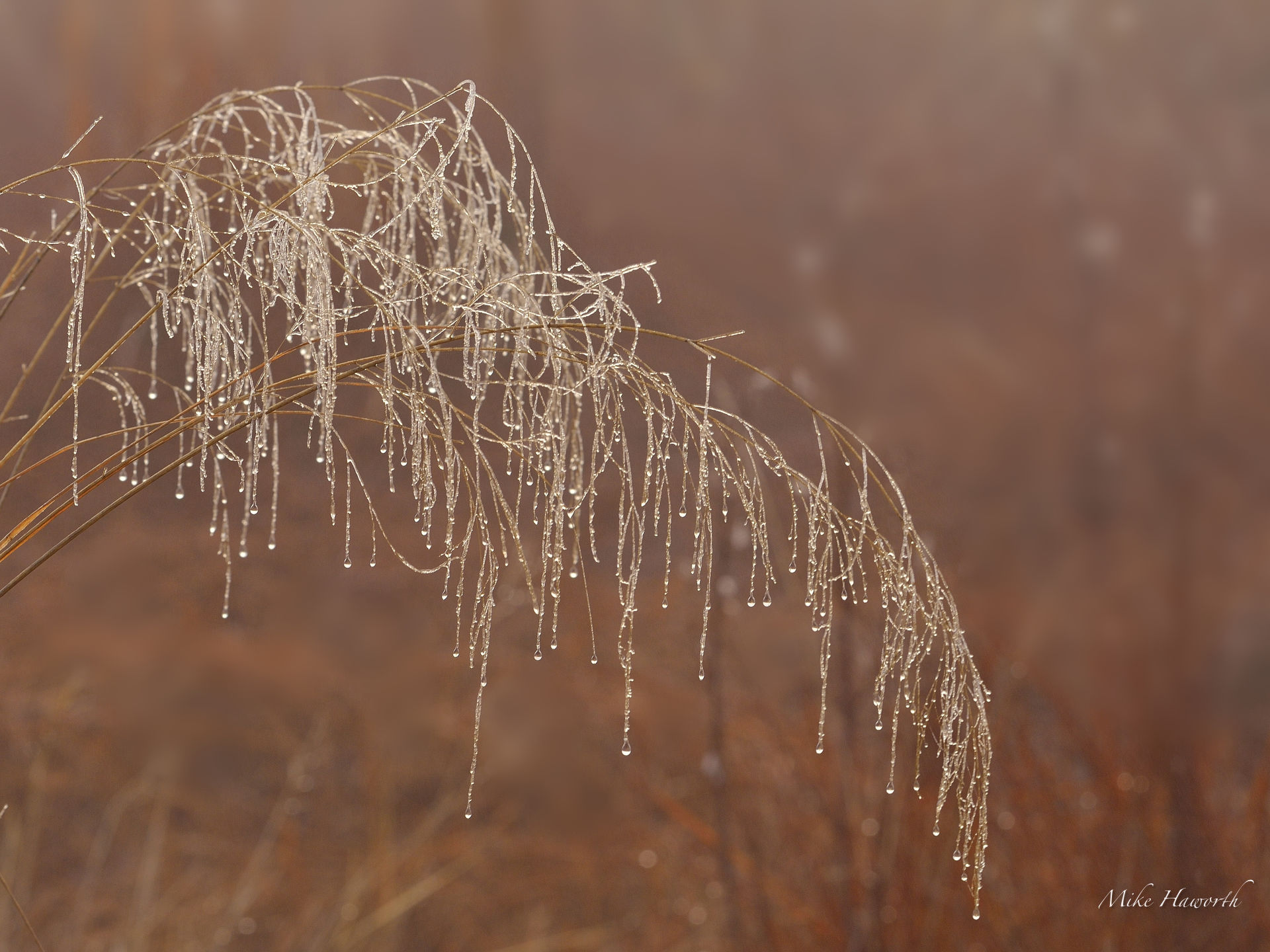
The thick mist really filtered and diffused the light. We drove past an open grassland in the almost sepia colour light . The heavy dew and icicles weighed down the grass. The morning light just caught the icicles and cold dew drops making a beautiful lacy abstract.

Marievale 7 July 2013  0022

It must have been around 8h30 when we came across five Greater Flamingoes feeding in a patch of water close to the road. The mist was still thick allowing a moody shot of them.

Marievale 7 July 2013  0024

We visited all of our favourite little spots. On our way past Kingfisher hide we came across hundreds of coots congregating on mass for some reason. It was an unusual to see such a large group.

Marievale 7 July 2013  0039

The mist was so thick it was difficult to get clarity but what was lost in definition was made up for in mood.

I am always intrigued by those long necks of the Flamingoes which help them find food in different depths of water and enable them to move their heads from side to side to facilitate their sieve feeding method. The flamingo stamps its webbed feet to stir up all sorts of food from the lake’s muddy bottom. It then sweeps its bill upside down through the water, filtering out food with its bristly tongue and special hair-like structures in its bill which act as a sieve or filter.The Greater Flamingo’s bill is shallow-keeled with a coarse filter to be able to strain out small invertebrates. The pinker Lesser Flamingo has a deeper-keeled bill with a fine filter to sieve out algae.

Marievale 7 July 2013  0051

Flamingoes are normally very gregarious which made this lone group of five quite unusual. After about half an hour of watching them, this family group flew off probably to join another flock.

Marievale 7 July 2013  0064

This image of a Black-headed Heron on the road in Marievale shows how thick the mist still was at 9h00 in the morning.

Marievale 7 July 2013  0065

With the window open for my camera support, it was very fresh. Needless to say a supportive partner with a hot cup of coffee and a hot-cross bun was very welcome at this point.

There are many Stonechats at Marievale. This male was wet and cold but had a perfect photographic perch. He was all puffed up, ready to defend his territory and seemed to be coping with the cold.

Marievale 7 July 2013  0072

The water was frigid but the birds trawled in the water regardless. Outwardly they seemed to be able to handle the cold just fine. One of the advantages of an early winter morning is that the atmostphere is usually very still, so the water surface is like a mirror. This just another one of those natural variations which makes such unexpected and interesting photographic opportunities. This young Black-winged Stilt was just such an opportunity.

Marievale 7 July 2013  0077

Marievale 7 July 2013  0138

This little Cape Wagtail also seemed to be almost oblivious to the cold water chirping away as it foraged along the water’s edge.

Marievale 7 July 2013  0082

Hottentot Teal are one of the most beautiful duck in Southern Africa. We are fortunate to have numerous duck species all of which are so colourful. This pair of Hottentot Teal were mating. In his fervour, this male did seem to be half drowning his mate.

Marievale 7 July 2013  0097

Shortly after they parted, the female washed herself – remember the water must have been icey cold. The colours of the female and the surrounding water matched perfectly.

Marievale 7 July 2013  0104

After a bath and just before take-off this female Hottentot Teal flapped her wings  to remove the excess water and then proceeded to jet out of the water. They seem to jump and flap at the same time getting airborne very quickly.

Marievale 7 July 2013  0116

This noisy little Three-banded Plover was right in front of us begging to be photographed – so I did.

Marievale 7 July 2013  0169

I had heard that the African Snipe could  bend the lower and upper mandibles of its beak but had never seen it before. This African Snipe bent its top mandible upwards. By sequentially opening and closing their mandibles they are able to manoeuvre their food up their bill and into their mouth without opening the full length of the bill.

Marievale 7 July 2013  0182

This particular African Snipe was resting in thick grass along the water’s edge. Until it moved to ruffle its feathers, we did not see it despite being right in front of us. The camoflauge is incredible.

Marievale 7 July 2013  0186

As you can see the mist had cleared by now and it had turned into a stunning clear blue sky day on the Highveld. An extensive fire had burned through the grasslands and some of the reed beds in Marievale. We found many  Cape Longclaws rumaging through the burnt grass stalks for insects.

Marievale 7 July 2013  0213

Another bird which seemed to be successfully feeding in the burnt grass areas in Marievale was this little Levaillants Cisticola.

Marievale 7 July 2013  0254

When we were driving thought the thick misty toward Marievale, the thought crossed our minds that might turn into magnificently unsuccessful photographic morning. Quite the opposite happened. It was a  fascinating morning with many photographic opportunities which I did not expect. We got greater insight into a number of bird species and yet another reminder by mother nature that when we take the time to fit in with her rhythm then much will be revealed.

“I would feel more optimistic about a bright future for man if he spent less time proving that he can outwit Nature and more time tasting her sweetness and respecting her seniority.”
―     E.B. White,     

I hope you found the Sunday morning trip around Marievale interesting.

Have fun

Mike

Misty Marievale Morning

I needed some practice before my trip to Chobe in early May, so Helen and I decided to go to Marievale early last Sunday morning. The weather service indicated that it would be cool but sunny. We travelled south of Johannesburg to Nigel. At around 7h00 the mist was so thick that we had to slow to around 40 kms per hour. We arrived at Marievale and it was covered in thick mist. We could hear all the ducks and coots so realised that there was plenty going on despite the weather. The mist eventually cleared. The light around 8h00 was beautiful and the air clear after the heavy rains on Friday and Saturday – perfect for photography. The reeds had been burnt in some sections which gave better visuals of some of the waterways.

Marievale is a bird sanctuary but you  can also see animals if you are lucky. We often have fleeting glimpses of Water Mongoose and Yellow Mongoose. The bird variety is superb and you are likely to see a new bird each time you go there.

The Cape Shovellers were busy eating the green and pink algae on the water surface.

Marievale-0413 130

There were two little Hottentot Teal feeding furiously on the pink and green algae on the water surface. These are such beautiful ducks.

Marievale-0413 080

Yellow-billed Ducks were busy feeding and  showing off some of the best colours.

Marievale-0413 114

A Black Headed Heron did some posing for us. It is interesting the way they sway their necks when they are hunting. I am not sure what purpose it serves?

Marievale-0413 102

A Black Headed Heron was very obliging and did some practice circuits for us just to get some landing shots.

Marievale-0413 024

You will find big ones at Marievale and small ones too!

This little male Stonechat was very accommodating. Most of the widow birds have lost their breeding colours but the little Stonechats are ubiquitious and always colourful.

Marievale-0413 040

This Little Grebe (previously called Dabchick) was very busy diving in the water in front of us for food.

Marievale-0413 121

While you can see a superb selection of birds at Marievale, you may also be fortunate enough to see some mammals too.

In an open patch of grass behind one of the bird hides this little Yellow Mongoose was very busy hunting for insects and watching out for birds of prey.

Marievale-0413 202

I was fortunate enough to get a good sighting of a Water Mongoose. It is much bigger than the normal mongoose and is a very good swimmer, as would be expected. It is probably as big as a decent sized cane rate. This Mongoose is furtive, so you have to be quick to get a shot.

Marievale-0413 156

In all, Helen and I spent a happy six hours at Marievale. It was cool but very productive until the clouds started to roll in and the wind picked up, so as the light deteriorated and the softies packed up and went home.

It was disturbing to see one of the hides had been badly damaged. Some individuals had broken the hide’s precast concrete walling and effectively destroyed two of the four walls of the one hide. Human beings …….!!??

I hope you liked the shots. I have added a Mongoose category and added to the Ducks, Lapwings and  Heron categories.

You will always be rewarded by something you never expected to see when you go into the bush.

Have fun

Mike

Marvellous Marievale

Marievale 1212 001
Marievale 1212 011
Marievale 1212 014
Marievale 1212 019
Marievale 1212 037
Marievale 1212 038
Marievale 1212 040
Marievale 1212 043

This a selection of shots taken yesterday at Marievale Bird Sanctuary, about one and a half hours drive SE of Johannesburg, South Africa. The variety of waterbirds and grassland birds is superb. At this time of the year the migrants have arrived such as Amur Falcons. The birds displayed here are the Yellow-crowned Bishop, Long-tailed Widowbird (displaying as it is flying), Black-winged Stilt feeding, Squacco Heron taking off, Yellow-crowned Bishop sitting in some beautiful grass and a Wiskered Tern plucking insects off the water surface but doing it in style – cross legged.