Talons over Serengeti

My penchant for raptors developed at the senior boarding school I attended called Falcon College in Zimbabwe. There was a very active Ornithological Society at the school and one of the extra mural activities was Falconry. My fascination for raptors has remained undiminished for the last 45 years. This Serengeti trip provided ample opportunity to feed my fascination for birds of prey.

“Photography is a love affair with life.”

Burt Uzzle

The second morning we were in the Serengeti we drove out north across the Grumeti River past the viewpoint close to one of the two dams in the area towards the the Raho river. Here we found a pride of Lion that had killed and almost completely finished off three Zebras. There were left overs and still some meat on the bones, but not very much.

20160307-D81_7228

It was incredible to watch, while the Lions are feeding on the carcass there were one or two Vultures and a Tawny Eagle circling patiently waiting for the Lions to have their fill and leave the carcass. As soon as the Lions moved away, the raptors descended onto the carcasses from everywhere.

The Hooded Vultures were the first to fly in to feast. They are a similar size to a Tawny Eagle, and so have a chance of taking their share of the feast. The size and shape of the bill indicates that it eats the scraps around the carcass  but does not have the ability to mix it up with the larger Vultures and tear meat off the carcass. Like a Bateleur and African Harrier Hawk, the Hooded Vulture’s facial skin  brightens when its excited or alarmed. The adult Hooded Vulture has pinkish facial skin.

20160307-D81_7328

The big guns flew past, Lappet-faced Vultures. This particular one was a juvenile who decided there was not enough to make it worthwhile joining the party.

20160307-D4S_9189

A few White-headed Vultures flew in to pick from the remains but did not stay long.

20160307-D81_7293

White-head Vultures are uncommon. Size wise they are considerably bigger than Hooded Vultures but smaller than the Whited-backed  and Lappet-faced Vultures. They are big enough to claim their share but there was not enough to go around.

20160307-D81_7291

“Of course, there will always be those who look only at technique, who ask ‘how’, while others of a more curious nature will ask ‘why’. Personally, I have always preferred inspiration to information.”

Man Ray

A dark morph Tawny Eagle was the first of the Eagles to arrive.

20160307-D81_7283

The Tawny Eagle can be mistaken for a Steppe Eagle during summer when the Steppe Eagle migrates down into Africa. There are two key differences. The Steppe Eagle is much larger than a Tawny and its gape extends past its eye whereas the Tawny’s gap stops just in front of the middle of the eye. Obviously very difficult to tell the difference from a distance.

20160307-D4S_8970

This particular morning was defined by three different morph Tawnys flying into feast on the remains of the carcasses. This was a buff or blonde morph Tawny flying in. These raptors must watch each other very carefully to see when one has found some food.

“Photography is the art of frozen time… the ability to store emotion and feelings within a frame.”
 – Unknown

20160307-D4S_9006

Pale morph Tawny Eagle flying in and dominating a piece of meat and pushing a dark morph Tawny away.

20160307-D4S_8981

The Tawnys are more aggressive than the larger White-backed Vulture and the spreading of its wings is a clear signal of dominance.

20160307-D4S_9039

A juvenile Bateleur Eagle also flew in having watched the Vultures and Tawnys descending from their aerial vantage point. This Bateleur had been feeding a some scattered pieces of meat away from the main action which is why its feet were blood stained. Carrion is an important part of a Bateleur’s diet. 

20160307-D4S_9011

The Bateleur also had to give way to the Tawny invasion.

20160307-D4S_9132

“The two most engaging powers of a photograph are to make new things familiar and familiar things new.”
William Thackeray

The third Tawny morph was the streaked type. There were two streaked morphs which flew in and they looked much stronger and more dominant, than the dark and pale morphs.

20160307-D4S_9164

The way these raptors fly into a feeding area is fast and dramatic.

20160307-D4S_9081

They certainly look intimidating on “finals”.

20160307-D4S_9082

I love the way raptors’ wing tips spread out like fingers when they are slowing down.

20160307-D4S_9176

The alula on the wing elbow was still in place suggesting that this streaked Tawny was coming in fast.

20160307-D4S_9093

This streaked morph Tawny was not going to take any nonsense from the bigger White-back Vulture and pushed it off the piece of bone it was pecking at.

“Photography deals exquisitely with appearances, but nothing is what it appears to be.”
 ~ Duane Michals

20160307-D4S_9117  

On a separate occasion, we saw this blonde morph Tawny try to push in between two Hooded Vultures perched on a dead tree branch quite close to the aforementioned dam. The interaction between these two species was the subject of my first post from my Serengeti trip.

20160308-D4S_0005

This was a particularly handsome character who decided to look for richer pickings.

“There are no rules for good photographs, there are only good photographs.”
~ Ansel Adams

20160308-D4S_0027

In the tree overlooking the dam just above where the lions had been feeding on a Zebra carcass, we saw a pair of Verreaux Eagle-Owls. We thought they might have  been waiting to fed on the remains of the Zebra carcass.

20160308-D4S_9603

Not so, they had other intentions. I did not manage to get a shot of the Verreaux Eagle Owl swooping down to the water’s edge to snatch up a large frog. This pair were hawking frogs from their perch overlooking the dam. I never realised they preyed on frogs. Normally when you see these huge raptors during the day they are in deep shade and their eyes are closed.  They have a diagnostic pink eyelid which is clearly seen when their eyes are closed.

“Learn how to see. Realize that everything connects to everything else.”
Leonardo da Vinci

20160308-D4S_9950

These Eagle-Owls always look so sleepy during the day but they were clearly watching all the goings on around the dam.

20160308-D4S_9607

This specie of Owls has especially long talons, similar to those seen on a Pel’s Fishing Owl. It is also Africa’s  largest Owl.

20160308-D4S_9608

We found this Secretary Bird quite close to the open area near the Grumeti runway. This character was striding through the grass and its mouth was open because it was panting as it was quite hot. This is Africa’s only very long-legged raptor. Both sexes look-alike.

20160307-D4S_9358

The next second it saw something ahead in the grass and ran off through the grass to catch it but missed. The Secretary Bird has substantial pads on the underside of its feet. It usually stamps on the ground to disturb its prey and then reigns blows on the victim with its feet to kill it. Secretary Birds are partial to snakes, insects, small birds, and small reptiles.

20160307-D4S_9368

After watching the Lion pride for much of the early morning, we decided to explore further north. In our travels we came across this Dark Chanting Goshawk. It did not let us get too close. The two types of Chanting Goshawk get their names from their melodious chanting calls.

20160310-D4S_0435

This is only the second time I have seen a Dark Chanting Goshawk, the other time was in Mashatu Game Reserve in southern Botswana. We usually see Pale Chanting Goshawks in South Africa and they are commonly seen in Etosha in Namibia. Dark Chanting Goshawks tend to frequent denser woodland areas than their pale counterparts which is why they are not usually seen as often as their pale cousins.

20160310-D4S_0442

On our last morning in the Serengeti this Black-chested Snake-Eagle was sitting at the top of a tree with a good view of its surrounding area, minding its own business. These Snake-Eagles are known to be a perch hunter but it also spends considerable time  on the wing in search of prey. They are known to hover frequently and are the largest raptors to do so.

20160316-D4S_2930

As with Rollers, Drongos and Lapwings, they taunt and harass any raptor close by.

“Distance lends enchantment to the view.”

Mark Twain

20160316-D4S_2948

Raptors have a nictitating membrane which covers their eye when they are washing, feeding or fighting or being attacked. This Snake -Eagle never knew which direction the Roller was coming from but instinctively its nictitating membrane started to cover its eyes during the aerial raid.

20160316-D81_8345

After being pestered, and once it had seen some prey in the grass, this Black-chested Snake-Eagle flew down from the tree into the grass but we did not see it catch anything.

20160316-D4S_2974

We saw an amazing variety of raptors when we were in the Grumeti area of the Serengeti. We had concentrated bouts of raptor sightings. You cannot but hold your breath when trying to capture decent raptor images, it is thrilling.

“And those who were seen dancing, were thought to be crazy, by those who could not hear the music.”

Friedrich Nietzsche

One of the more intriguing aspects was the number of colour variations of Tawny Eagle we saw in one morning. All of this took place outside the main migration period showing just how much life and variety remain in the Serengeti outside the migration.

“No man has the right to dictate what other men should perceive, create or produce, but all should be encouraged to reveal themselves, their perceptions and emotions, and to build confidence in the creative spirit.”

Ansel Adams

Explore, seek to understand, marvel at its interconnectedness and let it be.

Have fun,

Mike

Serengeti moods

This post shows some of the scenes we were fortunate enough to witness while wandering around the Western Corridor of the Serengeti. We were based at the Grumeti Tented Camp and were privileged to be able to shoot from a CNP/&Beyond 4×4 vehicle specially adapted for five photographers.

“Whatever we are waiting for – peace of mind, contentment, grace, the inner awareness of simple abundance – it will surely come to us, but only when we are ready to receive it with an open and grateful heart.”
~ Sarah Ban Breathnach

The grandeur and space together with an abundance of wildlife make the scenes in the Serengeti breathtaking. One of the unanticipated benefits were the building rain clouds. The rains start in the Western Corridor in late March and April.  The migratory herd follows the rains so they were making their way north from the southern part of the Serengeti toward the Western Corridor in early March. The great migration should reach the Western corridor around May on its way further north towards the Mara. Much of the wildlife synchronises with the rhythm of the region. Lions though breed all year round. This pair of mating Lions are likely to produce the next generation of cubs just after the migration has passed through this area, as the gestation period of a Lioness is around 100 days. 

 20160306-D81_6950

A small herd of Zebra was moving north through the red oat grass with a darkening afternoon sky as a backdrop. The atmosphere prickles with excitement when the African sky darkens like this, heralding an impending storm.

20160306-D81_6984

Generally, Zebra are peaceful but every now and then males decide that they have to sort out their differences and establish the hierarchy. This fight started with a little pushing and kicking but surprisingly developed into a full on battle where each fighter was trying to bite the other and not on the flanks or legs but each other’s neck and throat.  The fight eventually broke up but it was one of the longest fights I have ever seen between two Zebras.

20160307-D4S_9265

Family treehouse! This pride of Lion seemed to be very comfortable up in an expansive Balanite tree. The Serengeti is known for this kind of Lion behaviour. Higher up, these Lions catch any passing breeze. The Tsetse flies are less troublesome and the Lionesses adults can get away from their demanding small cubs. The trees also provide good lookouts. The Serengeti is flat so that a little elevation combined with excellent eyesight is an advantage.

20160309-D4S_0205

Morning lounge! This pride had finished feeding on three Zebra which the adults had killed the night before. All of the pride members were just relaxing after what must have been a busy night of dining. There are not many waterholes around in this part of the Serengeti but there is the Grumeti river, and just to add to the excitement it is full of massive crocodiles.

20160308-D81_7433

“Not what we have but what we enjoy, constitutes our abundance.”
~ Epicurus

An afternoon view while looking for Lions. March is the month before the  rains begin in earnest in this part of the Serengeti. The clouds built up every afternoon creating a wonderful dramatic blue background to the red oat grass.

20160306-D81_6959

Dawn on the Serengeti. I am not sure why but the dawn and dusk phases are characterised by a yellow-orange which looks yellower than we are used to in South Africa. There was a reasonable amount of moisture in the air so there was also mist in the low-lying areas at dawn. As the sun rose , the heat quickly removed the mist.

“To live a pure unselfish life, one must count nothing as one’s own in the midst of abundance.”
~ Buddha

20160312-D4S_0916

One of the attractions in the Serengeti is the abundance of Lions. On this occasion, we found two Lionesses with their new-born cubs. It was the last light of the day and the grass was lush and long. The cubs could only see above the long grass by climbing up on their mothers. Great maternal patience was exercised when these needle sharp teeth and claws dug into their necks.

20160308-D4S_0081

This was not the main migratory herd but an advance column of Zebra and Topi. There is something very spiritual about seeing such abundance! 

20160314-D81_8144

“Abundance is not something we acquire. It is something we tune into.”
~ Wayne Dyer

It had rained the night before. Now it was breathless, cool, quiet and fresh at dawn on the Serengeti plain.

20160307-D81_7399

Predator gaze! A lioness peers over the long grass in search of prey.

20160311-D4S_0579

Late one afternoon gazing across the golden grass at the storm brewing in the distance, we treated to an incredible display of light and colour.

“I’ve always been one to love a good storm
The warmth of the air when a storm is brewing
The look of the clouds when they come rolling in
The rushing of the wind passed my ears
The feeling of rain falling on my skin
The sound of thunder and the flash of lightning
The warmth you feel when the sun finally comes out and life is calm again
How fast it can come and go …….
~ Unknown

20160310-D4S_0477

A “tower of Giraffe” making their way down the hill towards a broad valley with many trees to browse on. You often see family groups but this was an unusually large herd of Giraffe  at around 07h00.

20160314-D81_8104

Another afternoon storm where the cumulonimbus were releasing their bounty. Somewhat surprisingly, we heard little thunder and did not see much lightning. This was unusual given the size of those cumulonimbus clouds.

20160310-D4S_0489-Pano

One afternoon, while we were watching the Lionesses with their very small cubs, we looked behind us and there was a build up of massive cumulonimbus formations which were pouring down on a section of the Serengeti way off to the west of us.

“Wind’s in the east, a mist coming in
Like something is brewing and about to begin
Can’t put my finger on what lies in store
but I feel what’s to happen has happened before.”
~ Bert in Mary Poppins

20160311-D81_7883

Another golden dawn across the Serengeti. It was a gloriously colourful start to the day. You have to pinch yourself because it is hard to believe you are bathed in this wonderful light.

20160312-D4S_0965

A “wade of Zebras”.

20160315-D81_8223

A “tower of giraffe” wandering off at dawn. 

20160314-D4S_1943

Yet another afternoon looking off to the west. The colours were soft with diffused light after a rain storm a long way off to the west of us.20160313-D81_8091

A herd of Zebra and Topi making their way slowly northward. There were plenty of Hyaena around but there were also many eyes.

20160313-D4S_1718

We often got back to camp at last light. This was the view from my tent at dusk – paradise!

20160310-D4S_0515

Given that the migratory Zebra have to contend with crocodiles in almost every river they have to cross, I would have thought this group would have been conditioned to be very wary of wading into the water. Somehow they knew there were no crocodiles in this waterhole.

20160315-D81_8258

The Grumeti river was wide at this point and bubbling with Hippo and crocodiles.

20160309-D81_7491

I saw more Eland (together) on this trip than I have ever seen before. On a few occasions we saw herds of over a thousand. Normally we would see small groups of up to 20 in South Africa. Like all Eland, these were very skittish so they did not allow us to get close.

20160315-D4S_2688

Red dawn with the sun just starting to peek above the horizon heralding a new day on the Serengeti.

“Gratitude is the open door to abundance .”
~ unknown

20160313-D4S_1471

An air-borne Impala ram racing between the towering Giraffe.

20160314-D4S_2019

All girls! This was a large “waddle” of Ostriches and there was not a male to be seen. Nature invariably offers more questions than answers.

20160314-D81_8164

A large group of Topi and Zebra mingling together on their migration north following the rains.

20160315-D81_8217

A gorgeous start to yet another amazing day in the Serengeti where you are able to feast your eyes on such natural abundance.

20160315-D4S_2184-Pano

This is a small selection of the scenes we were privileged to photograph. I wish more people could experience this incredible beauty, wonder and abundance because perhaps then there would be more appreciation for what we already exists and more readiness to preserve and cherish it.

The universe operates through dynamic exchange… giving and receiving are different aspects of the flow of energy in the universe. and in our willingness to give that which we seek, we keep the abundance of the universe circulating in our lives.”
~Deepak Chopra

Explore, seek to understand, marvel at its interconnectedness and let it be.

Have fun,

Mike

Serengeti Lions – family time

After finding the large Lion pride in the area around a dam the previous afternoon, first thing the next morning we headed off west back to that small dam. The earth ridge around the west side of the dam was ideal for the morning directional light. We found the pride of 24 Lions had draped themselves along the ridge behind the dam. This pride comprised females and cubs. The male was off with one of the females, privately working hard to increase the pride.

“A world without the distant roar of Lions at dawn as the mist starts to lift would be too terrible to contemplate.”

~ Derek Joubert

This pride of 24 Lions excluded the mating pair and also excluded two females with three cubs which had separated from the pride while their cubs were too young to join the pride.

While the large pride of Lions lay along the earth ridge, we were hoping for some great portrait shots. It had rained the night before so many of the cubs looked bedraggled and as you can see in the next image the clouds still hung heavily in the sky.

20160308-D81_7433

The size of this Lion pride and the number of cubs of different ages suggests that the structure of the pride has been stable for some time.

“Stop and unplug,” say I; “look around you, at the vastness and greatness of the natural world.” Some stop. Others need binoculars to tie their shoelaces.”
~ Fennel Hudson

These two mischief makers came down to the water’s edge for a drink.  All their “rough and tumbling” had made them very dirty and what they saw reflected in the water worried them. You will notice how full both cubs’ bellies were, full of Zebra.

20160308-D4S_9591

Other cubs just relaxed. It must have been busy the night before as you can see from the cub at the back soaking up all the sun’s warmth on his tum.

20160308-D4S_9631

Two cubs came down off the ridge with their mother to drink at the water’s edge. The water surface was still with their reflections only broken by the ripples from them lapping up of the water. The Lioness had been kicked in the face by a Zebra the night before which is why her right eye looked swollen and bruised. The one thing you will never see is a Lion looking sorry for itself.

20160308-D4S_9693

This cub was very wary of his reflection in the water.

20160308-D4S_9790

You can see how easily a little mud can turn those beautiful tawny coats into dirty bedraggled looking ones.

20160308-D4S_9795

The beauty of the ridge was that when the Lions walked on top of it, the background was far behind creating perfectly blurred backdrops.

20160308-D4S_9801

On this particular morning, the Lions were relatively inactive so we did not get any real action like play fighting.

20160308-D4S_9909

It is interesting to see some cubs, just like human children, like to watch all the goings on from a distance.

20160308-D4S_9891

This shot was taken of one of the Lionesses after just having had a drink of water.

20160308-D4S_9859

After their usually busy nights, Lions rest up for most of the day. They also spend time re-affirming their bonds with the pride through touching, head rubbing, licking and purring. When it comes to feeding, it is every Lion for itself and biggest first. Growling, snarling and paw slaps are common around a kill, where ranks are enforced, with adult males usually eating first, followed by the females and then the cubs. It is probably necessary for both the cub and the Lioness to re-affirm the bonds the next day.

20160308-D4S_9855

One of the Lionesses got up and had a good stretch before wandering down to have a drink from the dam. You can see from the shape of this Lioness she was a powerful killer.

20160308-D4S_9853

This cub was snarling at its own reflection in the water.

20160308-D4S_9817

Later on that day we found the same pride of Lions some distance from the dam lying in the afternoon shade provided by a large Balanite. The next image is a panorama which shows the environment which suited the Lions perfectly. There was open space with relatively long red oat grass which Lions could just disappear in when they lay down.

20160311-D81_7887-Pano

Real family time. The cubs  bonding with their mothers and aunts. The Lionesses do not seem to get much peace with all the cubs around. The younger ones are very demanding, wanting to suckle frequently.

20160309-D81_7611

A day later, in the same area, when found the pride on the move. I liked the image of these two Lionesses, alert and looking for prey in long grass.

20160310-D4S_0302

Early one morning, we found these Lionesses lying in a patch of short grass as the sun was just starting to rise. The colours look strange but at first light with lots of dew on the grass that was the colour of the light they were bathed in.

20160311-D4S_0519

A hour or so later when the sun was higher in the sky and the colours turned to something we were more familiar with. One of the Lionesses got up and started to walk off. On her way she stopped to sharpen her claws on these tree trunks. A few minutes later the cubs followed suit.

20160311-D4S_0539

For me, this is an iconic image of Lioness in a sea of grass, ready to crouch down and disappear into the sea of tawny grass as soon as she could see prey.

20160311-D4S_0578

One evening, we found the two Lionesses with very small cubs. The cubs might have been small but their demands were big. This Lioness was grimacing because two cubs were trying to suckle and fighting over one of her teats.

20160308-D4S_0100

This was one of the causes of her grimace – cuteness with sharp teeth and claws.

20160308-D4S_0086

This family was lying in the cool, long grass. The only way the cubs could get any perspective was to climb on top of their mother. “While you are climbing you should also attack the neck – just in case!!!”

20160308-D4S_0081

These images were taken in the last light of the day and are testament to the incredible low light capabilities of Nikon’s D4s camera.

20160308-D4S_0063

The cubs were not sure about this big green thing (our vehicle) which had moved in quite close, so the cub was hiding behind its mother.

20160308-D4S_0059

Once they relaxed with us around, the cubs were very playful so we had to wait to get a gap in the grass to take a shot.

20160308-D4S_0052

Already all the signs of a “lionheart” were developing.

20160308-D4S_0046

Populations of African Lions have declined by 42 percent over the past 21 years, according to data from the International Union for Conservation of Nature (IUCN) in July 2015, with fewer than 20,000 Lions remaining. The latest update to the IUCN Red List continues to identify Lions as “vulnerable to extinction” (one level above endangered).

According to Scientific American, the African Lion is not classified as endangered mainly because conservation efforts have resulted in an 11 percent growth in lion populations in Botswana, Namibia, South Africa and Zimbabwe. Most of these southern populations live within fenced reserves which have reached their carrying capacity and can not support additional lion numbers. Outside of those four nations, the situation is altogether more serious. Lion populations have fallen in most other countries, with an average decline of 60 percent. The worst hit has been the West African population of lions, which has now been classified as critically endangered. A study published in 2014 found that only about 400 lions remained in the 17 nations of West Africa.

“Where did we human beings get the idea that we have the right to commercialise everything we come across in nature for our sole benefit. With our lack of awareness we have no conception of how we upset the interconnectedness of nature through our ignorant, selfish interference. Canned Lion farming for hunting purposes is just one horrific example.”

~ Mike Haworth

Serengeti is one of the major African National Parks where you can see Lion in vast unfenced areas. Swelling population pressure and loss of habitat is unrelenting. Even in National Parks long known for their conservation efforts such as Kenya’s Masai Mara, the Lions are under threat. The Marsh pride became well known through the wonderful BBC series “Big Cat Diary”. In December 2015, a number of Lionesses in the Marsh pride were poisoned by herdsmen for interfering with their cattle. The poisoning does not stop at the Lions but also impacts others in the food chain from Hyaena and Jackal to Vultures and Eagles.

Here is your country,

Cherish these natural wonders,

Cherish the natural resources,

Cherish the history and romance,

as a sacred heritage,

for your children,

and your children’s children.

Do not let selfish men

or greedy interests

skin your country of its beauty, its riches or its romance.”

~ Theodore Roosevelt

At the current rate of destruction, I wonder how many more generations are going to have the privilege of seeing these magnificent beasts in their natural, uncontained habitat – wild and free.

Explore, seek to understand, marvel at its interconnectedness and let it be.

Have fun,

Mike

Lion around in Serengeti

I was fortunate enough to spend ten days in the Serengeti with three old friends and two new ones as part a CNP Safari in mid-March. We were based in the Western corridor at the Grumeti Tented Camp, which is sited on the banks of the Grumeti river, about 50 kilometres from Lake Victoria. The main Wildebeest migration was still down in the south-western part of the Serengeti but the huge herds were slowly making their way North following the rains. The migration herd was led by Topi, Eland and Zebra. March is usually the last month that visitors can get around in the western corridor before the heavy rains, which start in April. Once the rains start in earnest, it pours and the black cotton clay becomes impassable in many areas by vehicle.

“To witness that calm rhythm of life revives our worn souls and recaptures a feeling of belonging to the natural world. No one can return from the Serengeti unchanged, for tawny lions will forever prowl our memory and great herds throng our imagination.”

~ George Schaller

On our first afternoon, we went west into an area of relatively long grass. This was an ideal environment for Lions as their coats blend so well with the colour of the grass. When Lions lie flat on their sides in the knee-high grass you would not know they are there but for the odd flick of a black tipped tail. We found a pair of mating Lions only because our ranger, Waziri, knew the general area in which to look. As we approached this Lioness raised her head.

20160306-D4S_8667

With the female getting up, this was the male’s cue to get into action.

20160306-D81_6989

This mating pair were part of a pride of 50 Lions controlled by a coalition of three male Lions. This large pride had split into two groups presumably because the hunting was more difficult outside the migration period. In this particular area we found one group, which was a sub-pride of 26 Lions. This pair had moved away from the pride to involve themselves in their courting rituals.

20160306-D81_7138

The mating process is not all about snarling and biting and can be quite tender in the early phase with the male licking and stroking the female’s neck and head.

20160306-D81_7081

“…few can sojourn long within the unspoilt wilderness of a game sanctuary, surrounded on all sides by its confiding animals, without absorbing its atmosphere; the Spirit of the Wild is quick to assert supremacy, and no man of any sensibility can resist her.”

~ James Stevenson-Hamilton

Lions mate every twenty minutes of so and seem to be oblivious of the passing parade. This Zebra saw the Lions once the male got up to begin mating.

20160306-D4S_8670

The penis of a male lion is covered with tiny barbs, made of hard protein called keratin. These barbs tear at the female’s uterus wall during mating which is painful for the female. This process allows the male to remove previously inseminated rival male’s sperm and thereby minimise sperm competition. Stimulation by the barbs also induces ovulation. Source: Animal Behaviour Chapter 6 by Zenobia Lewis.

20160306-D4S_8689

Lion mating is often accompanied by snarling, biting, growling, and threats.

20160306-D4S_8696

 Each mating is a brief coupling lasting usually less than a minute. Sometimes the female turns and swats the male during dismount (most likely as a result of the pain invoked by a barbed penis).

20160306-D4S_8697

A male Lion often bites the female’s ear or neck at the end of mating to distract her from the pain of the withdrawal of his barbed penis. Like all felines they have short penises and the barbs helps secure it long enough for ejaculation. Despite his attempts at distraction the Lioness inevitably ends up trying to give him a swipe with her large paw. 

20160306-D81_7034

“If I have ever seen magic, it has been in Africa.”

~ John Hemingway

During his dismount the male makes sure he turns his face well away from the potential paw slap.

20160306-D4S_8700

You can see from the condition of this male Lion’s teeth that he was young and in his  prime.

20160306-D4S_8706

Our mating Lions were lying in the long red oat grass in the warm sun of the afternoon as heavy cumulus cloud were forming.

20160306-D81_6959

One of the rules of the bush is to ensure there is sufficient distance between you and your enemy to make your escape. This small herd of Zebra knew where the mating Lions were and gave them a wide berth, outside attack range.

20160306-D81_6983

“Africa has her mysteries and even a wise man cannot understand them. But a wise man respects them.”

~ Miriam Makeba

Within the pride, the territorial males are the fathers of all the cubs. When a lioness is in heat, a male will join her, staying with her constantly. The mating itself is a quick affair lasting not more than a minute or so and often ends with a roar from both parties. Both parties then promptly rollover and rest or sleep. This process can go on every twenty minutes to half an hour for days.

20160306-D81_7041

When you look at a pride of Lions, and it is clear that there are more females than males, usually a ratio of about two or even three to one. Considering that male and female Lions are born in equal numbers, the question arises: What happens to the missing males? Only about 1 in 8 male Lions survive to adulthood, according to Dereck Joubert.

20160306-D4S_8707

The genesis of new life under African skies.

20160306-D81_7063

Lionesses have a gestation period of three and a half months (about 108 days). Lions live up to about 18 years old in the wild but the males do not usually get past 10 years due to fights and being deposed from their pride.

20160306-D4S_8721

All lions face high mortality as cubs, for a variety of reasons, including injuries, lack of food, illness and being killed by adult lions. When male Lions begin to reach sexual maturity around two years old, the dominant males within the pride kick them out. After being kicked out, the young males roam the savannah on their own or in small bands, often with their brothers or cousins, negotiating the “no-cat’s” land between territories of other lions. If they stray into these territories, they are likely to be attacked and killed. A majority of male Lions die during this time. The territorial male you see mating has therefore been through the “fire of life” to have his own pride and the right to mate and represents the best of the best.

“Africa is mystic; it is wild; it is a sweltering inferno; it is a photographer’s paradise, a hunter’s Valhalla, an escapist’s Utopia. It is what you will, and it withstands all interpretations. It is the last vestige of a dead world or the cradle of a shiny new one. To a lot of people, as to myself, it is just home.”

~Beryl Markha

Explore, seek to understand, marvel at its interconnectedness and let it be.

Have fun,

Mike

Serengeti in black and white

 Every now and then I like to stop and look at my wildlife images slightly differently. I love colour in my images but it is also worthwhile looking at some of the images in black and white. For a change, I will also let the images do the talking and not my words.

Photography is love affair with life.

– Burk Uzzle

First day in the Serengeti


Second day in the Serengeti Serengeti Photographic Safari Serengeti Photographic Safari

Great photography is about depth of feeling, not depth of field.
Peter Adams

Serengeti Photographic Safari

Serengeti Photographic SafariSerengeti Photographic SafariSerengeti Photographic SafariSerengeti Photographic SafariSerengeti Photographic SafariSerengeti Photographic SafariSerengeti Photographic Safari

There is only you and your camera. The limitations in your photography are in yourself, for what we see is what we are.
– Ernst Haas

Serengeti Photographic SafariSerengeti Photographic SafariSerengeti Photographic SafariSerengeti Photographic SafariFirst day in the Serengeti

Look and think before opening the shutter. The heart and mind are the true lens of the camera.

Yousuf Karsh

Serengeti Photographic Safari

Serengeti Photographic SafariSerengeti Photographic SafariSerengeti Photographic SafariSerengeti Photographic SafariFirst day in the Serengeti

I always thought good photos were like good jokes. If you have to explain it, it just isn’t that good.
– Anonymous

First day in the SerengetiSerengeti Photographic SafariSerengeti Photographic SafariSecond day in the SerengetiSerengeti Photographic SafariSerengeti Photographic SafariSerengeti Photographic SafariSerengeti Photographic SafariSerengeti Photographic Safari

Light is your crayon, and there’s always another color in the box.

– Tedric A. Garrison


Explore, seek to understand, marvel at its inter-connectness and let it be.

Have fun

Mike


Kwaheri Serengeti

Kwaheri is the Swahili word for goodbye. This is the last post describing our explorings in our latest trip around the Serengeti. After spending much of the morning close to Seronera watching lions we slowly made our way out of the Serengeti toward the Ngorongoro crater.

“Wonder is the beginning of wisdom.”
Socrates

Before heading out of the Serengeti, we did one last  trip along a section of the Seronera river we had not been down before. A couple of kilometres off the main road we came upon six Lionesses walking along the sand road. They all looked to be in great condition and there was a mix of ages in the group. You can see the age of a Lion in its eyes.
Serengeti Photographic Safari

It was clear these Lionesses were hunting.  This younger female was rubbing her face against this older female’s face and neck – reaffirming the bond before the hunt.

Serengeti Photographic Safari

Joseph, our ranger, knew exactly where these Lionesses were going. There was a open patch leading down to the river about a kilometre further down the road. He guessed they would go down there and wait for the game to come down to drink. We drove on down to the river and waited. About ten minutes later we saw the first Lioness walking towards us through the grass. All six Lionesses had spread out in a sweep.

Coming together is a beginning.
Keeping together is progress.
Working together is success.
-Henry Ford

Serengeti Photographic Safari

All six Lionesses walked right down to within ten metres of where we were parked – Joseph’s intuition was spot on! I love this image of one of the six Lionesses in her prime. The front on image shows her power. She is a good looking Lioness and exudes strength, just look at those muscular front legs.

Serengeti Photographic Safari

 There was wisdom and experience in her eyes. She was relaxed but alert.

Serengeti Photographic Safari

This image of one of the older of the six Lionesses. It was about 8h00 in the morning so the light was still good – not too much contrast. What I liked about this image is that it shows the the flexibility of this Lioness – alert, relaxed, lithe and powerful.

Serengeti Photographic Safari

The six girls milled around before spreading out to get into an unstructured ambush formation because they still had no idea which direction their potential prey would be coming from .

Serengeti Photographic Safari

Two of the older Lionesses lay some distance away from the other four. Their back to back resting position showed that they were down near the river for a reason. They were hunting and knew the game would come to them. Their combination provided 360 degree vision.

Serengeti Photographic Safari

Unusually, we were the only vehicle down near the river. Once the Lionesses had settled down it must have been about fifteen minutes later when a herd of Wildebeest came from the same direction as the lionesses on their way down to drink. Three of the Lionesses were not in position when the Wildebeest appeared. They immediately flattened themselves into the low grass. It was then that we saw how well camouflaged they were.

The strength of the team is each individual member.
The strength of each member is the team.
-Philip Douglas “Phil” Jackson

Serengeti Photographic Safari

I thought the Wildebeest would have seen some of the Lionesses but they continued to come down into the kill zone on their way down to the water. Everything was set. The thrill of watching nature’s drama unfold was breath-taking.

Serengeti Photographic Safari

One Lioness, who must have been about 20 metres away from the lead Wildebeest broke cover too early and the Wildebeest scattered. She she did not allow enough Wildebeest to go passed her down to the water.

Serengeti Photographic Safari

It was surprising to watch all the Lionesses then rush forward from their cover only to see all the Wildebeest gallop away. They all looked surprised to have missed and looked around to see if there were any animals coming from behind them – no such luck.

“Success is not final, failure is not fatal: it is the courage to continue that counts.”

 Winston Churchill

After the failed ambush, a few of the younger Lionesses started rubbing themselves against each other and licking each others’ face and neck. Bonds reaffirmed despite their failure.

Serengeti Photographic Safari

We waited for quite a while with the Lionesses hoping that the Zebra and Wildebeest milling around in background might forget about the Lionesses and return to drink. No such luck, eventually the Wildebeest wandered off further down the river so we left the scene to look for other fascinating interactions. This was one occasion when I wished we had the whole day to sit and wait down next to the river because there would be a kill sometime later that day.

Once we left the six Lionesses, we got a message that a Leopard was under siege up a tree. A Lioness lay at the base of an Acacia Totalis preventing the Leopard from  coming down.  This looked like it could be a long siege. The light and perspective made the photography extremely difficult so the images are shown for their story-telling rather than image quality.

Serengeti Photographic Safari

The male Leopard must have experienced this situation before because he had a larder of four Thompson’s Gazelle which was sufficient food to endure the siege but he would not be able to get to water. I had never seen a Leopard larder before, usually they have one kill stashed up a tree.

“Patience is power.
Patience is not an absence of action;
rather it is “timing”
it waits on the right time to act,
for the right principles
and in the right way.”
Fulton J. Sheen

Serengeti Photographic SafariSerengeti Photographic Safari

The Leopard had stashed five ‘Tommies’ in the tree but one must have fallen down and lay next to the Lioness. The Lioness had food for a day or so  we figured the Leopard had a long wait before he could get to the river to drink.

Serengeti Photographic Safari

In the grasslands, we often saw Secretary birds striding through the grass foraging. They prey on anything from snakes, baby birds and small reptiles such as lizards. Most of the time we saw these Secretary birds in pairs, which were spread widely apart.

Serengeti Photographic Safari
The wonderful aspect about the grasslands is that every now and then there are these igneous intrusions forming ‘kopjies’ which become a hub for wildlife. Picturesque islands in the grass.

Serengeti Photographic Safari

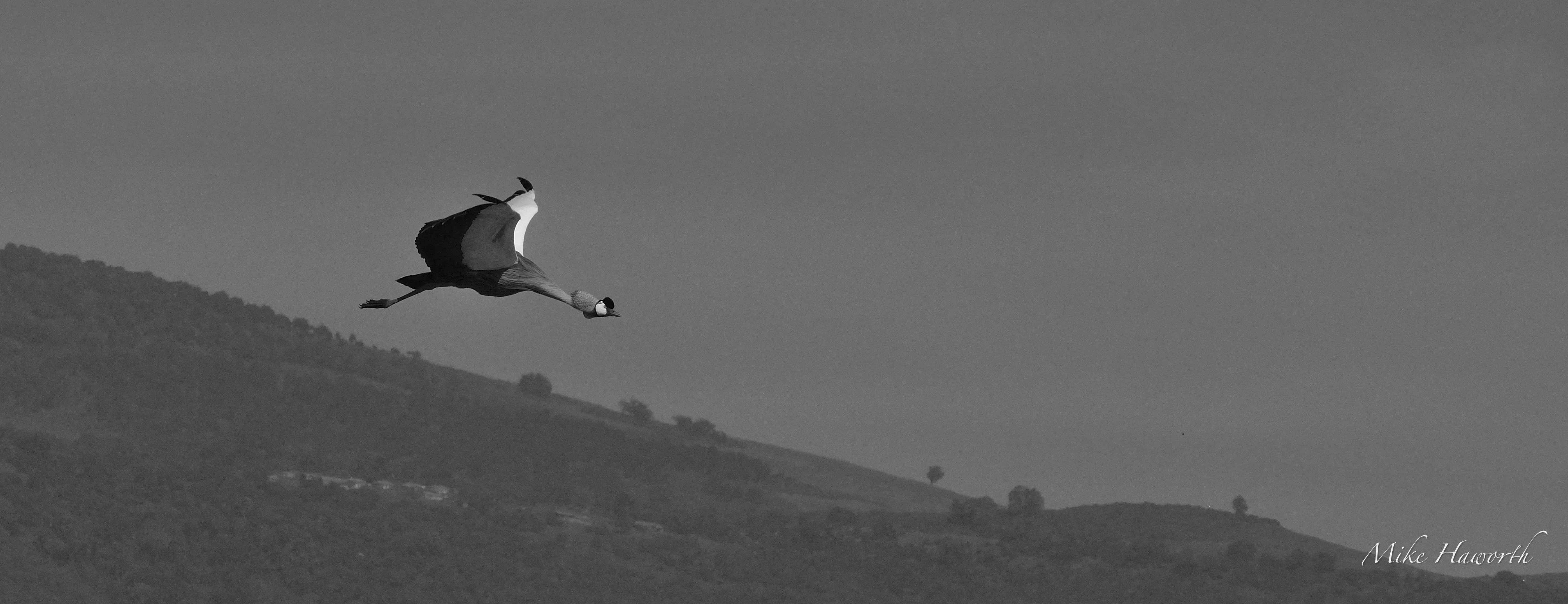
Further along the road down near the river we found Grey Crowned Cranes. They normally forage in pairs. Unlike the Secretary Birds which forage in spread out pairs, the Grey Crowned Cranes move closely together.

Serengeti Photographic Safari

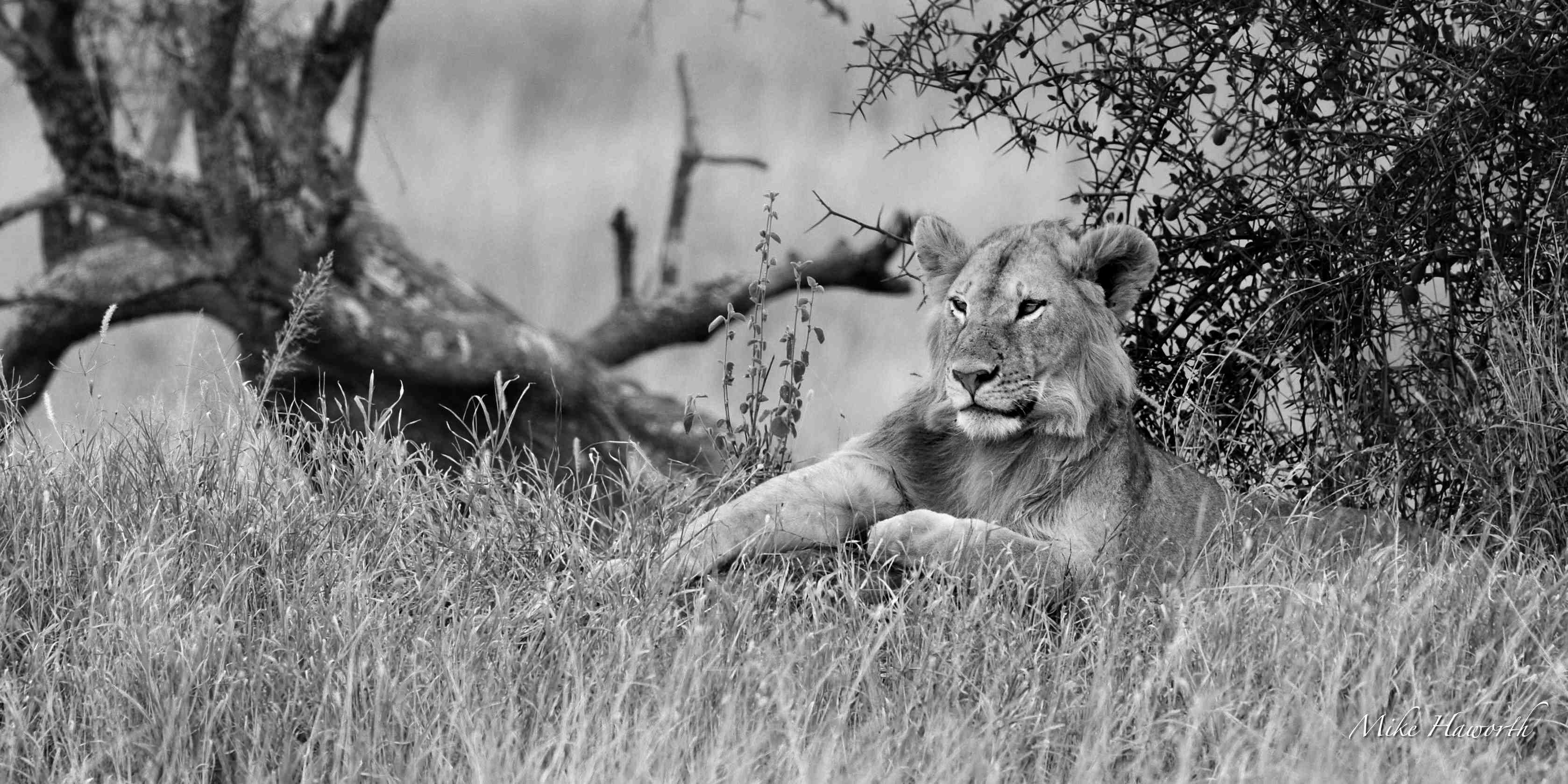
The chances of seeing Lion in these ‘kopjies’ is very good. It provides them with shade and an observation point from which to watch the grazing herds.

“Our brightest blazes of gladness are commonly kindled by unexpected sparks.”
Samuel Johnson

Serengeti Photographic Safari

We were on our way down to the Hippo pool in the Mbalageti river. At points along the river small groves of date palms had established themselves. Each looked like a mini oasis.

Serengeti Photographic Safari

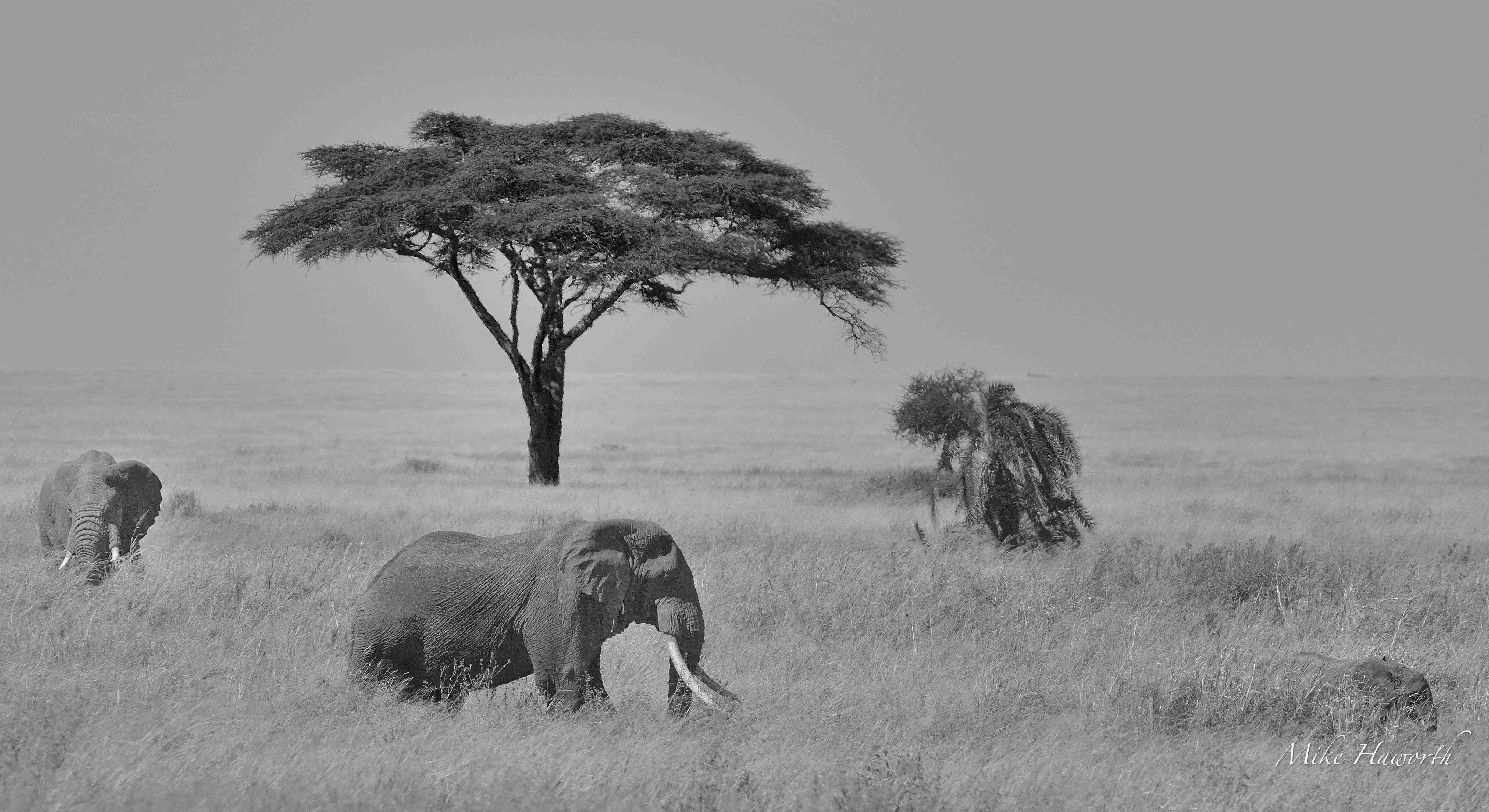
This river was a lifeline for many animals who lived on these vast open grasslands. This breeding herd of Elephant had just slated their thirst. The Elephants seemed to be significantly more relaxed than those we have seen in Kruger Park.

Serengeti Photographic Safari

Having left the Simba Hills region, we travelled for about an hour to get to the Naabi Hills park entrance gate. Once at the Naabi hills gate offices, we got out of the vehicle with our cameras to get images of the Superb and Hildebrandt Starlings which were  hopping around the parking area.

Serengeti Photographic Safari

The Hildebrandt Starling looks quite similar to the Superb Starling but does not have a white collar and its eye is orange not white. It also has striking colouration.

Serengeti Photographic Safari

While trying to get decent images of Hildebrandt’s Starling, I found this little Silverbird which was just starting its moult.

Serengeti Photographic Safari

Having signed out of the Serengeti National Park, we left Naabi Hills and headed south for the Ngorongoro crater. It wasn’t two kilometres along the main dirt road when we passed a lone Lioness using the cut of the road to stalk up to a group of Grant’s Gazelle. She did not look like she had a chance but was obviously not fussed about the passing traffic.

The next image was taken at last light once we had arrived at the Serena Ngorongoro crater lodge. This lodge had a spectacular view looking over the crater. It was positioned at the top of the rim of the crater looking east over the crater.

Serengeti Photographic Safari

This was the view from the wooden deck walkway at the lodge. It gave a hint of what we could expect the next day. It was our intention to get into the crater at 6h00 when the park gates opened.

Serengeti Photographic Safari

“Knowing others is intelligence; knowing yourself is true wisdom. Mastering others is strength; mastering yourself is true power. If you realize that you have enough, you are truly rich.”
Lao Tzu, Tao Te Ching

Explore, seek to understand, marvel at its interconnectedness and then let it be.

Have fun

Mike

Serengeti’s Seronera

This is the fourth post describing our wonderful trip to the Serengeti. ExplorePlus put the trip together. Their arrangements were well structured and worked like clockwork. The accommodation was ideal. The trip was eight days with 2 full days of travelling getting there and back. If your are passionate about your photography, there is so much photographic potential that you need to spend more than just a few days in the 25,000 square kilometre Serengeti National Park  – which is why we will be going back.

Our third day in the Serengeti was spent exploring the central area around Seronera. This is a transition zone where the southern area is mostly grassland and the northern area is woodland savanna. As usual we left the lodge around 6h00. It was dark, the chatter was animated and our expectations were sky high. As we got onto the main road we drove south toward Lake Magadi. Mother nature again started to magically paint the sky. At first light her palette had muted soft subtle pinks, apricots and gentle yellows.

“Wake! For the Sun, who scatter’d into flight The Stars before him from the Field of Night, Drives Night along with them from Heav’n, and strikes The Sultan’s Turret with a Shaft of Light”

Omar Khayyam, Rubaiyat of Omar Khayyam

This is magical time of the day for me. The air is still and crisp. The bush is quiet and has a mystical sense about it. The drama of the night is over and the new colours in the sky offer promises for the day ahead. While colour was being infused into the sky, the full moon hung large in the morning sky as a guardian watching over the last of the nocturnal creatures making their way back to their places of rest. Instead of facing the sunrise, we looked west to watch the  beautifully soft, subtle light.

Serengeti Photographic Safari

Just before sunrise when colours start to flood the sky, the bush has a sense of that ‘in between time’. It is neither dark nor light. The colours at this time of the day are unimaginable in the full light of the day. You get a feeling that we are witnessing something very special which instills a sense of wonder and anticipation whilst being bathed in this ‘other worldly’ light.

Serengeti Photographic Safari

After watching the sunrise, we bid the moon good day and turned right off the main road to follow the Seronera river  for a few kilometres. The side road followed the river lined with fever trees and had open sandbanks which provided access for the game to come down to drink.

“We must begin thinking like a river if we are to leave a legacy of beauty and life for future generations.”

David Brower

Just a short way along the river it opened up into a Hippo pool which was  boiling with Hippos, perhaps thirty or forty. There was not much going on but it smelt ripe so we moved along.

Serengeti Photographic Safari

We moved on further up the river and stopped where a low drift crossed the river. Our timing was perfect because all the Sandgrouse were flying in to drink.  We caught the start of the air show. Their call has a distinctive squeaking sound a bit like a rubber duck being squeezed. Squadron after squadron flew in to drink. Some flew straight down to the water ‘s edge while others flew to within twenty metres of the water and watched to see what was going on before waddling down to have a drink.  It was such fun trying to photograph them flying in and landing. The first couple of tries you will be too slow but you soon get the hang of it.

The next image is of female Yellow-throated Sandgrouse coming in to land.

Second day in the Serengeti

The next image of a male Yellow-throated Sandgrouse with landing gear down, air brakes on, alula extended with full flaps as he was coming into land. These birds are sleek and beautiful fliers.

Second day in the Serengeti

We were lucky enough to also see a few Namaqua Sandgrouse coming in to drink.

Serengeti Photographic Safari

After having had a drink of water this female Yellow-throated Sandgrouse did a little dance. I am not sure why, maybe she was displaying to the other members of the flock or just ‘chuffed’ to have had a drink.

Serengeti Photographic Safari Serengeti Photographic Safari

After having watched the Sandgrouse for about an hour, we crossed the river and not fifty metres up the road we came across a small pride of Lion. This Lioness, in peak and lean condition, was lounging on a fallen tree trunk.

Serengeti Photographic Safari

She had a cub with her who was lying in a fork of the fallen tree trunk. The Lioness was wide awake and attentively watching a large herd of Impala wandering around behind us.

Second day in the Serengeti

Lying in the long grass some thirty metres away was a large but young male Lion, who every now and then raised his head to check out the lie of the land. The Impala were too tempting and eventually the Lioness got up to lie on the tree trunk in a position where she could face the Impala.

Serengeti Photographic Safari

After watching and waiting for a while we decided to move back across the river and continue exploring.  As we crossed the river we saw two male Cheetah who looked to be coming down to drink. They suddenly stopped. We thought it might have been some of the vehicles which had put them off. Joseph, our ranger, assured us it was not the vehicles but,  being down wind, they probably got scent of the Lions. The Cheetah alliance immediately turned around and walked back into the long grass and that was the last we saw of them.

“Wilderness gave us knowledge. Wilderness made us human. We came from here. Perhaps that is why so many of us feel a strong bond to this land called Serengeti; it is the land of our youth.” Boyd Norton, Serengeti: The Eternal Beginning

A little further down the road the hot air aviators were playing. Carried by the prevailing wind, at times they flew at tree top-level to give their passengers a thrill. These balloons are dead quiet until they fire up their burners. When they are low, the sound of those burners usually mean they are heading for a row of trees and need some height.

Serengeti Photographic Safari

After watching the ballooners for a few minutes we wandered back down the Seronera river. Next to the main road there was a grove of large fever trees and his lordship was lounging on a bough of one of these large fever trees. This male Leopard looked to have not a care in the world.

Serengeti Photographic Safari

Serengeti Photographic Safari

What is amazing about this area south of Seronera is that in the midst of these vast grasslands you will come across a river course bordered with verdant vegetation. It extends for miles, suggesting a perpetual spring is supplying the water. The source of the Seronera river is right up near the Maasai Hills.

Serengeti Photographic Safari

The Seronera river is home to much bird life and provides water for a wide range of game from Buffalo to Elephant, Hippo, Rhino, Lion , Leopard, Wildebeest, Warthogs and Zebra. You may even find a Cheetah hiding in the reeds along the river. We were not sure what was going on but this young Cheetah had decided this was a good place to park, away from any unwanted attention. It was also not a bad place from which to ambush passing ‘Tommies’.

Second day in the Serengeti

After watching this Cheetah doing not much, we decided he was not about to hunt and was likely to park there for most of the day, so we wandered further up the river course. On our way, Joseph got a message that there was a Lioness with three cubs in an grassed over old quarry not far from the headwaters of the Seronera river.

Knowledge is like a lion; it cannot be gently embraced. South African Proverb

When we got there, one cub was lying in an old tyre, needless to say we did not take a shot of him. Much more intriguing was this cub inside the bush. He was lying in a contorted orthopedic slumber but seemed quite content. Despite his contortions we wondered why he would even try to get up into the bush and could only assume that he was up there to catch any passing breezes to keep himself cool.

Serengeti Photographic Safari

We had our lunch watching this sleepy family. After lunch decided to drive down out of the quarry to continue our exploring. Not 100 metres down below the Lion family was this Wildebeest calf wandering directly toward to the Lions, oblivious of them. We immediately turned around to watch the inevitable. The lost calf wandered behind the Lions but the Lioness immediately picked up on the calf and started tracking it. We tried to get a better view but  is was not two minutes later when she wandered back towards her cubs with the erstwhile calf in her jaws.

Every morning in Africa, a Gazelle wakes up. It knows it must run faster than the fastest Lion or it will be killed. Every morning a Lion wakes up. It knows it must outrun the slowest Gazelle or it will starve to death. It doesn’t matter whether you are a Lion or a Gazelle… when the syn comes up, you had better start running.  – Unknown

Second day in the Serengeti

That calf did not stand a chance. It was in the wrong place at the wrong time and so continued the circle of life. With mixed feelings after watching this hapless calf being despatched, we drove back down along the river. Grazing alongside the river were three large Buffalo bulls. They had all the making of ‘dagga boys’ but with no ‘dagga’ on their bosses. You always get the feeling that they are looking at you and saying “what the hell are you looking at!!”. The Buffalo bull had his grooming flock along for the ride. You don’t often see Yellow-billed Oxpeckers, the Red-bills are much more common.

Serengeti Photographic Safari

Close to the Buffalo bulls we stopped at an open patch of water where the river had been partially dammed. There were Red-billed Teal and Egyptian Geese and this lone Black-winged Stilt tending her nest. At first glance it looked like she had made her nest on a crocodile’s head. It was a flat rock but the flimsy nest showed just how fragile this preparation for new life was in a dangerous world.

Serengeti Photographic SafariSerengeti Photographic Safari

Further down the river we saw our first adult tree climbing Lion. This Lioness was perched up in this Sausage tree. It was a great lookout point. The rest of the pride was doing what Lions do best during the middle of the day.

Second day in the Serengeti

“There is language going on out there- the language of the wild. Roars, snorts, trumpets, squeals, whoops, and chirps all have meaning derived over eons of expression… We have yet to become fluent in the language -and music- of the wild.” ― Boyd Norton, Serengeti: The Eternal Beginning 

The river course attracts all sorts. This one lone large bull Elephant was causally making his way down the river without a care in the world. He stopped occasionally to nibble on tasty grasses and leaves.

Second day in the Serengeti

Down the Seronera river closer to the main road we got back to the fever tree grove. In one of the large fever trees about 30 metres off the road was what looked to be the same male leopard who had by now changed position probably because of the sun. This large male Leopard was in a classic Leopard pose sprawled out along this horizontal fever tree bough.

Second day in the Serengeti

I had been a warm day so his aerial lounge must have been perfect to catch any passing breezes.

Second day in the Serengeti

The evening was coming and it was clear the Leopard had no intention of coming down from his lofty perch anytime soon so we decided to head back toward the lodge. On the way we came upon a group of Reticulated Giraffe. One in particular caught our eye mainly because of the Red-billed Oxpeckers hard at work on his hide.

Second day in the Serengeti

We saw plenty of Lions during the day and a great array of bird and other animals sightings. The Lioness killing that Wildebeest calf was dramatic but we were privileged to see all sort of intimate animal and bird behaviour. It was a  totally absorbing day.

Life is not measured by the number of breaths we take, but by the moments that take our breath away- unknown  

Seek to understand, marvel at its interconnectedness and then let it be.

Have fun,

Mike    

Serengeti’s western corridor

This post describes our second day in the Serengeti. As usual we were up a ready to leave the lodge at 6h00. It was such a pleasure to have a photo-buddy who was so enthusiastic. Elana was already waiting at reception with our ranger, Joseph, and the tour leader, Donovan, by the time I arrived at 5h55. Her enthusiasm was infectious.

“It is a wholesome and necessary thing for us to turn again to the earth
and in the contemplation of her beauties to know of wonder and humility.”
Rachel Carson

We left the lodge before sunrise and got onto the main road just as mother nature was painting the eastern morning sky. We stopped to try capture the beauty of the saturated blues, reds, oranges and yellows which were ablaze in the sky. Nowhere else, but the Mara and Serengeti, have I seen these tones of yellows in a sunrise.

Serengeti Photographic Safari

The air was crisp, the bush dark but the sky was coming alive. Trying to capture the beauty of those sunrises was human folly but we tried anyway, inspired but humbled. As the sun started to rise it progressively washed the saturated colours out of the sky so we moved on to see the Wildebeest migration first hand. This was never going to be the big drama of the Mara river crossings but rather to get a measure of the size of the mega-herd and hoping to see the Wildebeest drama when they came down to the Grumeti river to drink.

“The human mind delights in finding pattern—so much so that we often mistake coincidence or forced analogy for profound meaning. No other habit of thought lies so deeply within the soul of a small creature trying to make sense of a complex world not constructed for it.”
– Stephen Jay Gould, The Flamingo’s Smile

As the morning light brightened we came across this White-bellied Korhaan crossing the road. This was a first for me.

Serengeti Photographic Safari

Early in the morning there is the eternal balancing between shutter speed and ISO. This was the only image where the Korhaan’s feet were sharp because my shutter speed was too low but I did not want the image to be too grainy. This White-bellied Korhaan crossed the road to join its mate and within a few seconds the two just melted into the grass. This is an aspect about being in the bush which always amazes me, someone coming by two minutes later would not have seen this pair of Korhaans.

Just after sunrise but before it had got hot enough for the raptors to start searching for rising warm air and thermals, we started to see quite a few different species of these avian predators. I am not sure of the identification of the Kestrel in the next image. I think it is a Common Kestrel based on its colouring, yellow legs, greyish head  and rufous coloured body and wings. It has a yellow eye-ring and cere and black tip to its beak.

Serengeti Photographic Safari

Prime time to see raptors perched in trees along side the road is usually before it gets hot enough for them to catch thermals, normally before 9h00. Apart from Kestrels, we saw this juvenile Tawny Eagle drenched in the early morning light. It was very alert and obviously hungry as it was scanning the surrounding area constantly.

Serengeti Photographic Safari

Not far along the road from the Tawny, we came across a Black-chested Snake-eagle which I could not get a decent shot of and a couple of hundred metres further down the road we found this Long Crested Eagle. The tonal contrast with the dark brown feathers and light, almost white sky background means you have to spot meter on the bird itself and forget about the sky colour.

 Serengeti Photographic Safari

By May, the Wildebeest herd had moved north from the southern grasslands into the western corridor. Here the vegetation was very different to the grasslands in the south.

Serengeti Photographic Safari

The grasses were longer because the Zebra and Wildebeest had not yet fully mowed them down and the tree density had increased substantially. What was fascinating about the Wildebeest migration was the intertwined relationships between all the animals and birds involved. There are three main herbivores in the perpetual migration, Zebra, Wildebeest and Thompson’s gazelle.

Serengeti Photographic Safari

The Serengeti migration is the greatest migration of large animals in the world  and it takes place each year.

Serengeti Photographic Safari

The migratory ‘mega-herd’ consists of around 1.5 million Wildebeest, 200,000 Plains Zebra and 350,000 Thompson’s gazelle. They follow a clockwise circular migration path, the timing of which is typically determined by the annual rainfall patterns.

Serengeti Photographic Safari

There are five sub-species of Wildebeest but only two are found in Tanzania. The two types of Wildebeest in the mega-herd are the blue and the Western White-bearded Wildebeest, the latter is only found in northern Tanzania and southern Kenya.

0906feature_map

Source:Joe Le Monnier ( www.mapartist.com)

Generally, though not always, the migration makes it way down through the southern part of Serengeti National park between December to April . During this time they assemble in vast grazing herds and the Wildebeest give birth to as many as 400,000 calves in February and early March. Once they have over grazed that area they start to move north up into the western corridor by May- June and on up into the Masai Mara between July and September. They then travel down the eastern corridor from October to November. The timing is not precise because it is primarily determined by the rainfall. The herds are effectively ‘storm chasers’.

Serengeti Photographic Safari
As the dry season begins the Zebra are the first to leave the Serengeti Plain. On route they eat the coarse top stems of the tall, dry, brown grass and expose the more nutritious leaves and younger stems. The Wildebeest have much wider muzzles than Zebra and effectively mow down the remaining grass to stubble and bare earth. Once cleared, green shoots germinate triggered by the removal of the taller vegetation and assisted by fertilisation from significant amounts of wildebeest waste. Within a few weeks the area looks like a verdant lawn which attracts the Thompson’s Gazelle. These antelope have small muzzles and are able to eat the high quality, new grass shoots. In the so-called ‘gazing succession’, the Zebra alter the vegetation in a way that is favourable for the Wildebeest and the Wildebeest further alter the grass base which suits the Thompson’s Gazelle.

“When we try to pick out anything by itself, we find it hitched to everything else in the Universe”
John Muir

One of the tough aspects about shooting the mega-herd is how to convey a sense of its size.  A general image without a focal point will lose the impact. This is why we waited for these two Wildebeest bachelors to start tangling to bring some focus to the general scene of Wildebeest grazing in this lush grassland next to the riverine forest. It is very tricky trying to get a reasonable panorama of the mega-herd because it is constantly moving. Generally, panoramas work on landscapes because they don’t move, though you have to be aware of the cloud movement.

Serengeti Photographic Safari

This grazing succession facilitates not only the size but the migration of the herds. Botanists have shown that the migration-linked grazing cycle actually boosts the grassland production. The grazers reduce competition by specialising on different sections of the grass, a process which is intelligently symbiotic.

“The means by which migratory animals navigate from place to place are as diverse as the journeys themselves. Some species follow an invisible road map created by the earth’s magnetic field, which they perceive through tiny magnets in their bodies. Others rely on landmarks such as mountain ranges and coastlines, the alignment of the stars in the night sky, or olfactory cues to determine where they’re going. Some even have a principle guidance mechanism and one of more backup systems – redundancy analogous to the backup systems on commercial jets.”
David S. Wilcove, No Way Home

As the mega-herd migrates it inevitably has to cross rivers. The Grumeti and Mara rivers are probably the two best known rivers in the Serengeti-Masai Mara region and the major river in the western corridor is the Grumeti river.  As can be seen from the next image the bush has changed significantly from the Serengeti Plains to riverine forests and savanna woodlands. The Grumeti is bordered by a riverine forest which opens up in patches, enabling the Wildebeest to come down to drink. While we were there, they were all around but did not come down to drink.

Serengeti Photographic Safari

The Grumeti river is not that big at this point but its benign beauty hides a dinosaur-style terror in its waters.

Serengeti Photographic Safari

Some of the largest Nile Crocodiles in Serengeti are found in the Grumeti river.

Serengeti Photographic Safari

There are so many Wildebeest around that there is a constant drone of their ‘gnu-ing”. The Nile crocodiles or  ‘flat dogs’ as we like to call them do not need to be clandestine.  The recent rains made the rivers very muddy which helped the crocodiles get up close below the surface of the water to within striking distance of the wary, but thirsty Wildebeest. The next image is of a small group of wildebeest gathering to build up their courage to go down and drink.

Serengeti Photographic Safari

It must be really disconcerting when you can see your nemesis basking in the sun just waiting for you. The Wildebeest often cross the river, not as part of the migration, just to move to a new  grazing area.

Serengeti Photographic Safari

The Grey Heron standing alongside this large crocodile somehow took the edge off the scene.

Serengeti Photographic Safari

We did not get to see a crossing and we waited for a while next to the Grumeti for Wildebeest to come down and drink. Our patience was not rewarded – we will just have to go back!!!!

We traveled for about 60 kilometres through Wildebeest on our way to within 20kms of Lake Victoria before having to turn around to get back to the lodge before sunset. On our way back we came across a carcass about 30 metres off into the grass. There was a gathering of White-backed and Griffon Vultures and Marabou Storks all looking for a piece of the action. White-backed Vultures often broke away from the carcass to give each other a go as did the Griffons!! Pecking and scratching seems to be the order of the day. No one looked to get seriously hurt. The next image is a pair of Griffon’s stepping away from the dinner table to have it out with each other. When not scrapping on the ground the Griffon Vulture is known to be the highest flying vulture and has been recorded at an altitude of 37,000 feet.

Serengeti Photographic Safari

Physically, all vultures appear built for scavenging. They have strong, hooked beaks that can tear a carcass open but unlike other birds of prey, their feet are not suited to catching live animals. The main exception appears to be the Hooded Vulture – as the smallest and most prone to being bullied off a carcass, it has diversified its diet to include termites and small reptiles such as lizards. Size really does count in the bush. When the Lappet-faced Vultures flew in everyone made room for them. When usually drop out of the sky in a lazy spiral and are often the last vultures to arrive at a kill. However, they quickly assert their dominance using their size to bully other vultures off the carcass. They tend to eat the skin, tendons and ligaments, which other vultures find hard to process, therefore do not go hungry for arriving late. They have a massive powerful beak with an attitude to match. These vultures rand up to a metre tall and have a three metre wingspan.

Serengeti Photographic Safari

“Nature teaches more than she preaches. There are no sermons in stones.
It is easier to get a spark out of a stone than a moral.”
John Burroughs

Serengeti Photographic Safari

Incredibly there is a natural order among this bush waste disposal team and, like the mega-herd grazers, have a complementary way of feeding.

Serengeti Photographic Safari

Each day we would leave the lodge in the dark and usually got back in the dark. As a result we never took images of the lodge. This day we got back in the light so I quickly roamed around to get a few images of the Serengeti Serena lodge. The rooms were styled on a Masai type dwelling.

Serengeti Photographic Safari

 I really liked that the lodge was not too glitzy, I thought the style was in keeping with the location. The staff at the lodge were very friendly and helpful which always adds to the ambience of the place.

Serengeti Photographic Safari

At the top of the hill behind the main dining and bar area was the swimming pool and look-out area which provided a wonderful south-looking view over the Serengeti Plains.

Serengeti Photographic Safari

It was incredible to think that we had traveled for 60kms through Wildebeest. This massive amount of ‘fast food’ is a draw for so many other animals and birds. The diversity and complexity of the flora and fauna dictates that you need to spend more than a couple of days exploring this area. What ever you do make sure that your stay in the Serengeti is not too short, otherwise you will not get a good enough sense of the wonder and rhythm of this place.

“I believe in time,
matter, and energy,
which make up the whole of the world.

“I believe in reason, evidence and the human mind,
the only tools we have;
they are the product of natural forces
in a majestic but impersonal universe,
grander and richer than we can imagine,
a source of endless opportunities for discovery.

“I believe in the power of doubt;
I do not seek out reassurances,
but embrace the question,
and strive to challenge my own beliefs.

“I accept human mortality.

“We have but one life,
brief and full of struggle,
leavened with love and community,
learning and exploration,
beauty and the creation of
new life, new art, and new ideas.

“I rejoice in this life that I have,
and in the grandeur of a world that preceded me,
and an earth that will abide without me.”
Paul Z. Myers, on Pharyngula

Seek to understand, marvel at its interconnectedness and then let it be!

Have fun

Mike

Serengeti shall not die

This is the second post showing some of the images from our trip in Tanzania in May. The first post showed images from Lake Manyara and the bounty of wildlife and birdlife which can be seen there. Day two of our exploration took us into the Serengeti National Park.

Going to the Serengeti has been one of my childhood dreams ever since I saw the documentary “Serengeti shall not die” in Rhodesia in the early 60s.

Elana and I were determined to take in as much of the Serengeti as we possibly could. Each day we were ready to leave the lodge at 6h00 and only got back after 18h00 each evening. We spent each day bathed in beauty and wildness, inspired by what we were experiencing – what a privilege!!

We left early in the morning of day three from Serena Manyara lodge and travelled through the mist in the Ngorogoro Conservancy highlands to arrive at the edge of the Serengeti. The next image is a panorama taken from the side of the road looking north onto the plains of the Serengeti. Double click on the image to see the detail in it.

Serengeti Photographic Safari

This vista stirred much excitement in us as we had just begun to taste what was in store for us for the day. That sense of expectation was such a buzz. This is one of the intangibles which make a photographic safari intoxicating with expectation, beauty and drama.

The word Serengeti is an approximation of the Maasai word “siringet” translated as “the place where the land runs on forever” or  “endless plains”. The Maasai live a nomadic existence along the edge of the Serengeti tending their cattle herds.

As we descended from the Ngorogoro highlands from the south-east on to the Serengeti’s grass plains we passed the Olduvai Gorge, where Dr. and Mrs. Leakey found the 1.75 million-year-old remains of Australopithecus boisei (‘Zinjanthropus’) and Homo habilis . This is one of the most important paleoanthropological sites in the world and has been instrumental in furthering the understanding of early human evolution.

Driving through the the low grass southerly section of the Serengeti plains we saw mainly Thompson’s and Grant’s Gazelle and a few Spotted Hyaenas. During the day we only saw single Hyaenas as they bomb-shelled looking for scraps and opportunities.

Serengeti Photographic Safari

As we travelled along the main dirt road in the Serengeti toward Naabi Hills, the numbers of gazelle scattered across the plains increased. The gazelles were predominately Grants and Thompsons. The Grant’s Gazelle are noticeably bigger than the Thompson’s Gazelle, nicknamed “Tommies”, and the white on their backsides extended right up to the tail and they do not have a dark brown stripe along their sides.

Serengeti Photographic Safari

The actual entrance into the Serengeti is in the middle of the plain and is demarcated by a acacia tree and an iron pipe archway with no side fence. The actual park entrance office is located in the Naabi Hills which is quite a few kilometres to the north of the Serengeti-Ngorogoro boundary. The view from the top of the Naabi Hills is something special. The treeless grassland in the south of the park is the most emblematic scenery of the park. These grasslands cover almost a third of the park, about 5000 square kilometres. The base layer in this area comprises metamorphic rocks such as gneiss and schist. This base layer is covered with a layer of volcanic ash from long ago eruptions along the edge of the Rift Valley in the Ngorogoro Highlands. The volcanic ash on the plains produces a particular type of soil. The fine-grained ash contains many salts. During the rains a portion of these salts dissolve and are washed down in the soil. These salts are deposited less than a metre below the surface and form a hard, almost concrete like, hardpan. It is this hardpan which prevents the trees from pushing their roots down deep into the ground and so the southern Serengeti plains are virtually treeless.

Serengeti Photographic Safari

In the parking area at the Naabi Hills entrance there were many Superb Starlings. These birds have stunning colours and are far too tempting for a photographer to resist. Needless to say Elana and I spent the next 45 minutes trying to capture decent images of these furtive birds.

Serengeti Photographic Safari

I could not resist taking a shot of Elana trying to get an ever closer shot of these Superb Starlings.

First day in the Serengeti

Naabi Hills, like so many of the hills in the area are granite outcrops and boulders called “kopjies”. You will find the envitable Rock Agama’s warming themselves on the boulders in these kopjies.

Serengeti Photographic SafariSerengeti Photographic Safari

Joseph was our guide in the Serengeti. He had a great sense of humour and was a fountain of knowledge. He was also very respectful of the wildlife and the park rules which impressed us. He was up and ready to show us around for 12 hours each day and was always cheerful and enthusiastic – what a great guy!!!.

Serengeti Photographic Safari

Once we had signed into the Serengeti National Park, we were off to explore the grass plains and islands in the sea of grass. From Naabi we headed for the Simba Hills. 

serengeti_lrg

We turned off the main road down onto tracks which led to the Simba Hills and further down along the Mbalageti river. On the way down to the river, we saw two young male Lions lying in the grass on top of a mound which gave them a good visual of the surrounding area. The Serengeti National Park is believed to hold the largest population of Lions in Africa.

First day in the SerengetiSerengeti Photographic Safari

Close to the Lions, we saw a pair of Grey Crowned Cranes foraging in the grass for seeds and insects. These cranes are uncommon in SA but they are frequently seen in this part of the world.

First day in the SerengetiFirst day in the Serengeti

We saw Superb Starlings all over the park.

First day in the Serengeti

Further down the river course, we came across another family of Lions with two females and a group of youngsters. The next image shows one youngster who was keeping cool in the long grass right next to the river. If we had not seen these Lions move into the long grass we would never have known they were there.

First day in the Serengeti

By early afternoon we had arrived at a grove of date palms with a reasonably large pool of water which accommodated a pod of Hippos. There were quite a few Hippos resting in the pool but surprisingly there were also a few lying out in the open in the sun.

First day in the Serengeti

The next image is not anything special as a photograph but I wanted to show the pink mucous which is the Hippo’s natural sunscreen. The skin secretes a thick red liquid sometimes called “hippo sweat” or “blood sweat”. The red liquid is an oily secretion made up of two unstable pigments – one red, the other orange. The red pigment acts as a sunscreen and also has antibacterial properties. It works to protect the Hippo’s hide from bacterial infections in all the scratches and bite marks and accelerate their recovery from flesh wounds.

First day in the Serengeti

After watching the Hippos for a while we decided to wander slowly back up to the main road to get to the Serena Lodge at Seronera by 18h00. On the way up to the main road we came upon this breeding herd of Elephants. They interrupted two young male Lions resting in the grass.

First day in the Serengeti

This breeding herd was on its way to the river to drink. There are two features about the Serengeti Elephants which are different to Elephants in Kruger Park. The breeding herds appear very relaxed and the adults have much longer and thinner tusks than their relatives in South Africa.

First day in the Serengeti

Down at the river, the scene was peaceful and the calves had great fun frolicking in the water. It was not very hot as it was cloudy that afternoon. In fact, every afternoon, the cumulus clouds built up making dramatic backdrops for our scenes.

Serengeti Photographic Safari

The next image shows one of the kopjies  which make up the Simba Hills. There is usually a good chance of seeing Lions lying on the boulders looking out over the grass plains. The Serengeti was the inspiration for Walt Disney’s Lion King and I am suspect pride rock was modeled on one of these kopjies.

First day in the Serengeti

Once back on the main road, we stopped to get a few images of this Greater Kestrel. We saw quite a few on this trip.

Serengeti Photographic SafariSerengeti Photographic Safari

The rangers are all in radio contact. As we were travelling on the road to Seronera, Joseph got a message that more Lions had been seen on the road toward the Maasai Hills so we turned off the Seronera road at the Magadi dam. A kilometre or two up the sand road we found a pride of four or five young Lions resting in the grass. It is always difficult to know just how many Lions there are lying in the grass as you will only see them if they lift their head to see what is going on.

First day in the Serengeti

After watching the lions for a while we headed back to the main road and were fortunate enough to see this Red-necked Francolin – a first for me.

Serengeti Photographic SafariFirst day in the Serengeti

We also saw White-headed Buffalo-weavers – also a first. These are much more picturesque than their red-billed black cousins.

First day in the Serengeti

The light on this Magpie Shrike was good. This is an old friend we often see in the Kruger park.

First day in the Serengeti

It was getting late and the light was not good and it had started to rain lightly and we were getting close to the turn off to the Serena Lodge. Suddenly by the side of the road we saw a Baleleur and Steppe Eagle tangling over a Guineafowl. There were a couple of revelations for me in this sighting. The first was the dominance of the Steppe Eagle.

Serengeti Photographic Safari

This is a large, robust and aggressive Eagle. The Bateleur backed off in response to the aggressive advances of the Steppe Eagle.

First day in the SerengetiFirst day in the Serengeti

No sooner had these two tangled when a Tawny Eagle flew in and landed on a fallen tree in the background. The Tawny was wise enough not to venture into the fray.

First day in the Serengeti

Another new insight for me was how the Bateleur’s face changed colour. When threatened it was a red colour. Some research reveals that the Bateleur’s legs and face change from orange-red to bright red depending on its level of excitement or emotion.

First day in the Serengeti

As soon as the Steppe Eagle had its fill, it flew off into a nearby tree to preen itself. The Bateleur came back to finish off the Guineafowl. I was amazed to see it face change from red to a yellow-orange tinge. Joseph indicated that, like a Harrier-hawk, the Bateleur’s face changes depending on its level of excitement. The white dots on the Bateleur’s back and wing feathers were rain drops.

First day in the Serengeti

The Steppe Eagle had its fill – just look at that bulging crop.

Serengeti Photographic Safari

Our first full day in the Serengeti was everything I hoped it would be and much more.

“Did you know that 80 percent of the information we receive comes through our eyes? And if you compare light energy to musical scales, it would only be one octave that the naked eye could see, which is right in the middle?

And aren’t we grateful for our brains that can take this electrical impulse that comes from light energy to create images in order for us to explore our world?

And aren’t we grateful that we have hearts that can feel these vibrations in order for us to allow ourselves to feel the pleasure and the beauty of nature?”

– Louie Swartzberg

Seek to understand, marvel at its interconnectedness and then let it be!

Have fun

Mike